Hair Transplant
Sapphire FUE Technique
Men Hair Transplant
Women Hair Transplant
Beard Transplant
Eye-Brows Transplant
Scar Coverage
Non-Surgical
Results
Packages
Patient Guide
About Us
Contact
WhatsApp Us
Pro-AcademyStem cell therapy uses the body's own repair signals to support hair follicles that have weakened or stopped growing. It is a newer, regenerative option with encouraging early research, offered after an honest assessment of whether it suits you.
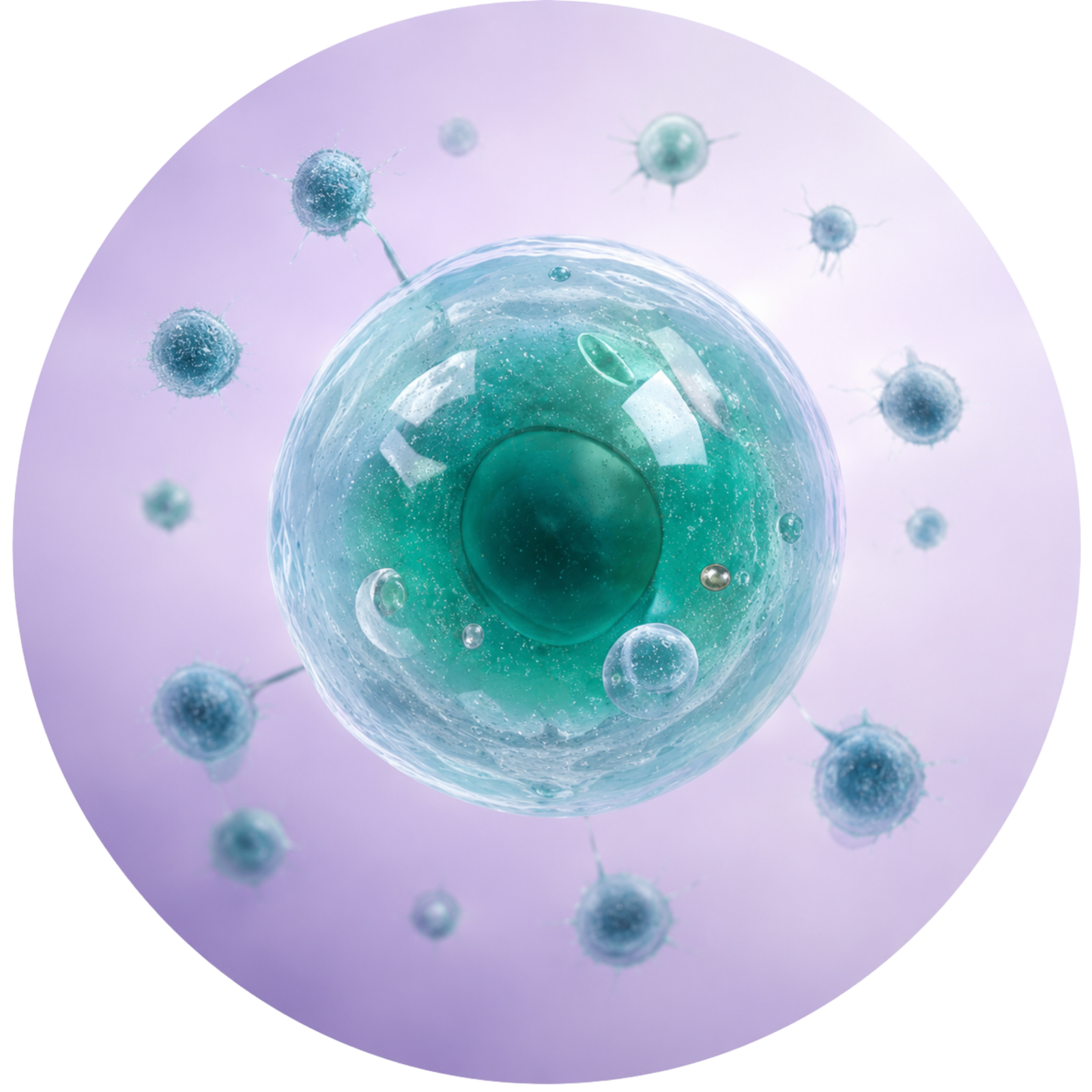
Every hair follicle holds a small reservoir of stem cells. They help the follicle rebuild itself at the start of each new growth cycle. With age, genetics and hormones, this renewal can slow down, and the follicle produces thinner, shorter hair until it rests.
Stem cell therapy for hair is a regenerative treatment. It places a preparation rich in stem-cell-based growth factors and signalling molecules into the scalp, with the aim of supporting follicles that are weak or resting but still alive.
A tiny sample is taken from your own scalp and processed during the same visit, so nothing foreign is used.
A medical-grade, laboratory-prepared solution of stem-cell-derived growth factors, with no tissue sample needed.
Your doctor explains exactly which preparation is used in your plan, where it comes from and why, before you decide on anything.
Illustration of the goal of treatment. Response differs from person to person.

A follicle that has stopped producing visible hair is not always gone. As long as it is still alive, regenerative signals may help it return to a healthier growth cycle.
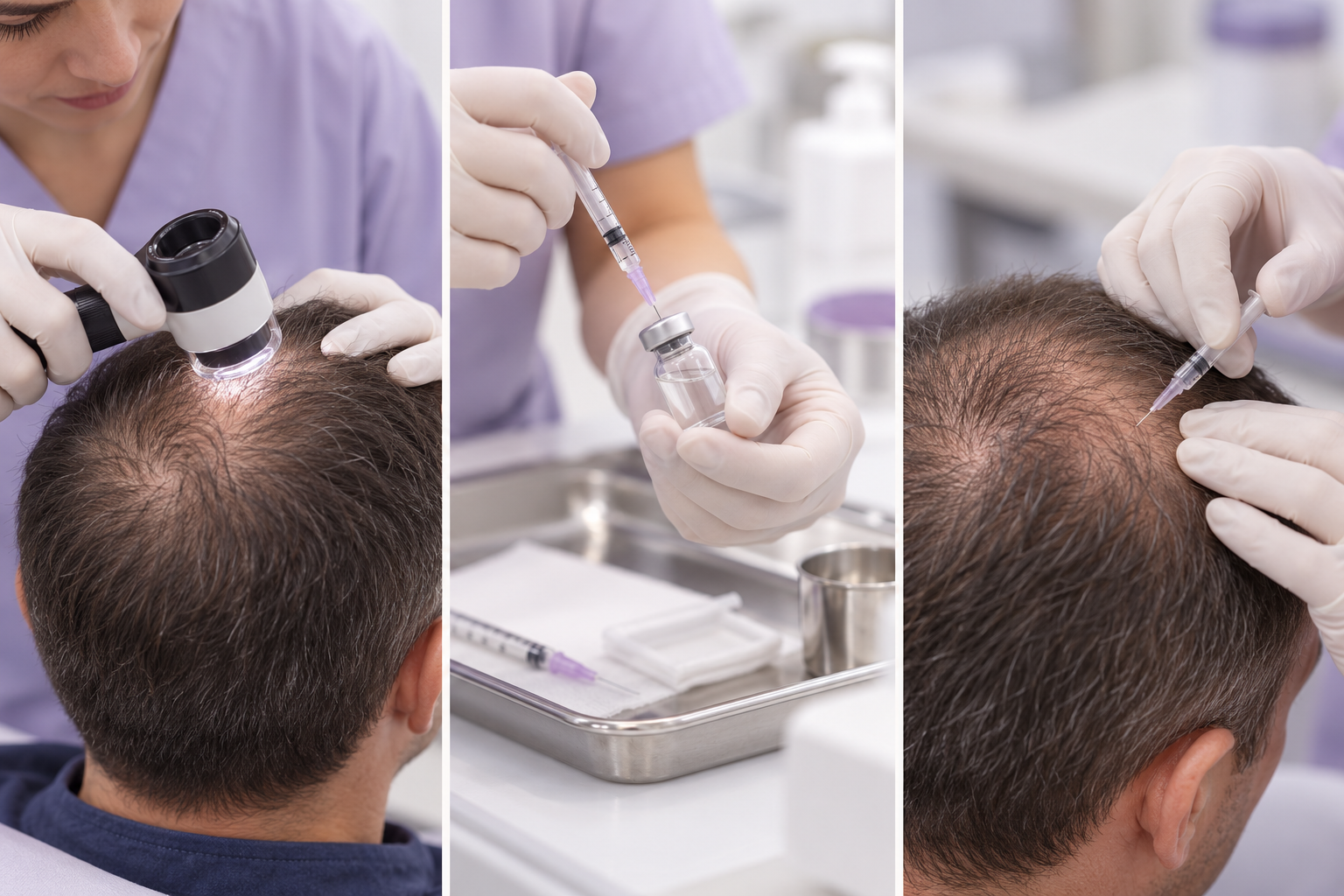
A visit usually takes one to two hours, most of it preparation. The treatment itself is done under local numbing, and you go home the same day.
Your doctor examines your scalp, checks the follicles under magnification and reviews your medical history and blood tests if needed.
The preparation for your plan is made ready under sterile conditions. If your protocol uses your own tissue, a tiny sample is taken under local numbing first.
The treatment areas are cleaned and numbed so the injections are as comfortable as possible.
Very fine needles place the preparation evenly across thinning areas, at the depth where the follicles are.
You leave with clear written instructions. Most people return to light daily activity the next day.
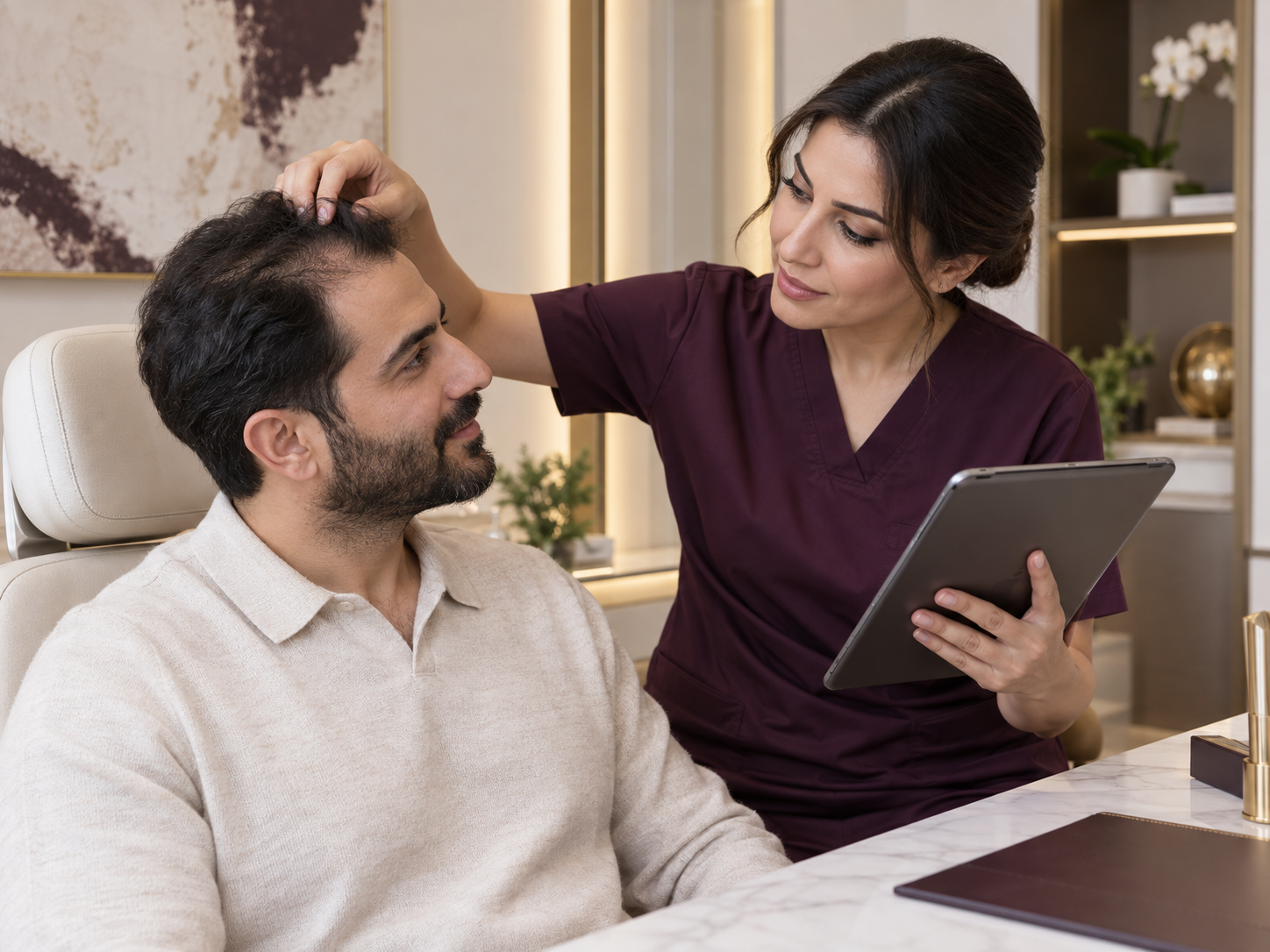
Regenerative treatment needs follicles to work with. It is most useful where hair is thinning or miniaturising, not where the scalp is already smooth and bald.
Not sure if you qualify? Send photos of your hairline, top and crown on WhatsApp. We will tell you honestly whether stem cell therapy, PRP, or another option makes the most sense. Ask us ↗
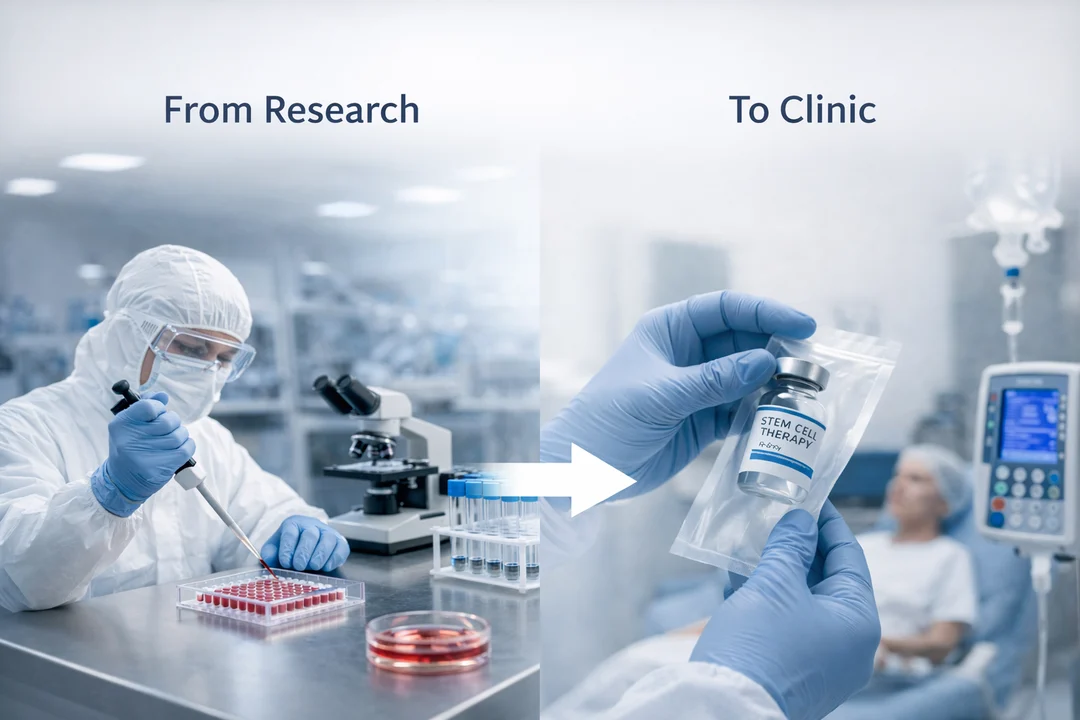
Some protocols are a single session; others repeat after a few weeks or months. Progress is reviewed with photos at 3–6 months.
Stem cell therapy for hair is a newer field. Early clinical studies have reported improvements in hair density and thickness for some patients, but most studies are small and long-term data is still being gathered. We share that openly, so you can decide with clear eyes.
Results vary widely from person to person. Stem cell therapy is not a replacement for a hair transplant in bald areas, and it is not a cure for genetic hair loss. It is one option in a plan that may also include PRP or medication.
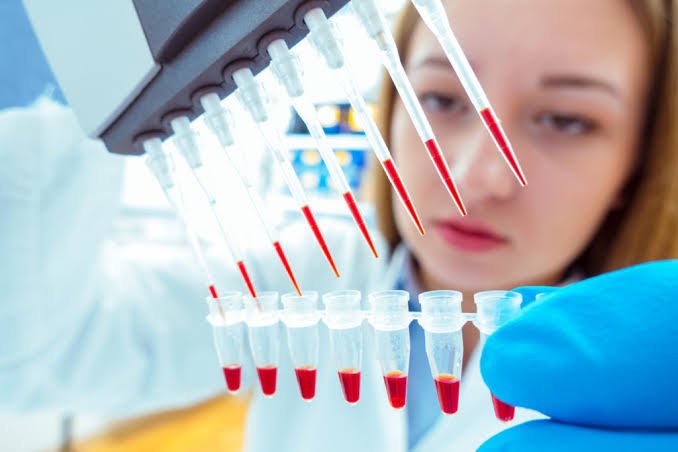
Performed by a qualified doctor in a clinical setting, scalp injections of this kind have a low rate of side effects. Like any medical treatment it is not right for everyone, so we review your medical history and the cause of your hair loss first.
| Effect | How common | Usually lasts |
|---|---|---|
| Redness at injection points | Common | 1–2 days |
| Tenderness or tightness | Common | 1–3 days |
| Mild swelling | Uncommon | 2–3 days |
| Small bruises | Uncommon | 3–7 days |
| Infection | Rare | Tell us straight away |
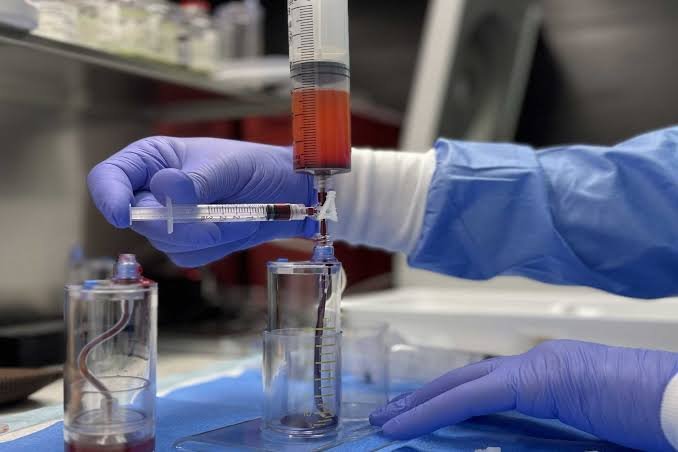 Planned case by case
A hair transplant fills areas that have gone bald, but the native hair around it can keep thinning. For selected patients, your doctor may suggest stem cell therapy as part of a wider plan to support that native hair.
Aims to support thinning hair around the transplanted area.
Supports the health of the tissue the grafts grow in.
Part of a strategy to protect your result over the years.
Only suggested when your assessment shows it may help.
Living abroad or visiting Amman? Your assessment begins on WhatsApp, and because stem cell plans need few sessions, they fit well around a short stay.
Send my photos ↗Hairline, top, crown and the back of your head, on WhatsApp.
We tell you if stem cell therapy is likely to help, or if another option suits you better.
We fit your sessions to your dates in Amman, often within a single trip.
Share progress photos at 3 and 6 months, in Arabic or English.
The questions patients ask us most. Your own plan always follows a personal assessment.
↗Still have a question?It can help some patients, but it is not guaranteed. Early studies show improved density and thickness in some people, mainly where follicles are weak but still alive. It cannot grow hair where follicles are gone, and results vary from person to person.
Depending on the protocol, the preparation is made either from a tiny sample of your own tissue, processed during the same visit, or from a medical-grade, laboratory-prepared solution of stem-cell-derived growth factors. Your doctor tells you exactly what is used and where it comes from before treatment.
The scalp is numbed before treatment, so most people feel only pressure or light pinpricks. Some tenderness for a day or two afterwards is normal.
It depends on the protocol and your hair loss. Some plans use a single session, others between two and five, spaced weeks or months apart. Your doctor sets the plan after your assessment.
Hair grows slowly, so changes are usually judged at 3 to 6 months, and sometimes later. We review progress with standardised photos so you can compare honestly.
When performed by a qualified doctor in a clinical setting with a clear, quality-controlled preparation, side effects are usually mild and short-lived: redness, tenderness or small bruises. Infection is rare. We screen your medical history first.
PRP uses growth factors from your own blood platelets and is the most studied regenerative option. Stem cell therapy uses stem-cell-based preparations and is newer, with earlier-stage evidence. Your doctor may suggest one, the other, or a combination.
No. Where the scalp is already bald, there are no follicles left to support, and a transplant is usually the right option. Stem cell therapy is aimed at thinning hair, and may be used alongside a transplant to support native hair.
It is not advised during pregnancy or breastfeeding, with active cancer or chemotherapy, with an active scalp infection, or with uncontrolled chronic illness. Tell us if you take blood thinners. Causes like thyroid or iron problems should be treated first.
Send clear photos of your hairline, crown and thinning areas. Our team will explain your options honestly, including when another treatment would serve you better.
Information on this page is for education and does not replace a medical consultation. Stem cell therapy for hair loss is an emerging treatment and research on it is still developing. Suitability, treatment plan and expected results are decided by your doctor after examination. Results vary from person to person and cannot be guaranteed. All procedures carry risks, which we explain before treatment.