Hair Transplant
Sapphire FUE Technique
Men Hair Transplant
Women Hair Transplant
Beard Transplant
Eye-Brows Transplant
Scar Coverage
Non-Surgical
Results
Packages
Patient Guide
About Us
Contact
WhatsApp Us
Pro-AcademyExosomes are microscopic vesicles that cells use to send signals to each other. Exosome therapy places them in the scalp to encourage weakening follicles. It is a promising, early-stage treatment, and we explain honestly what it can and cannot do before you decide.
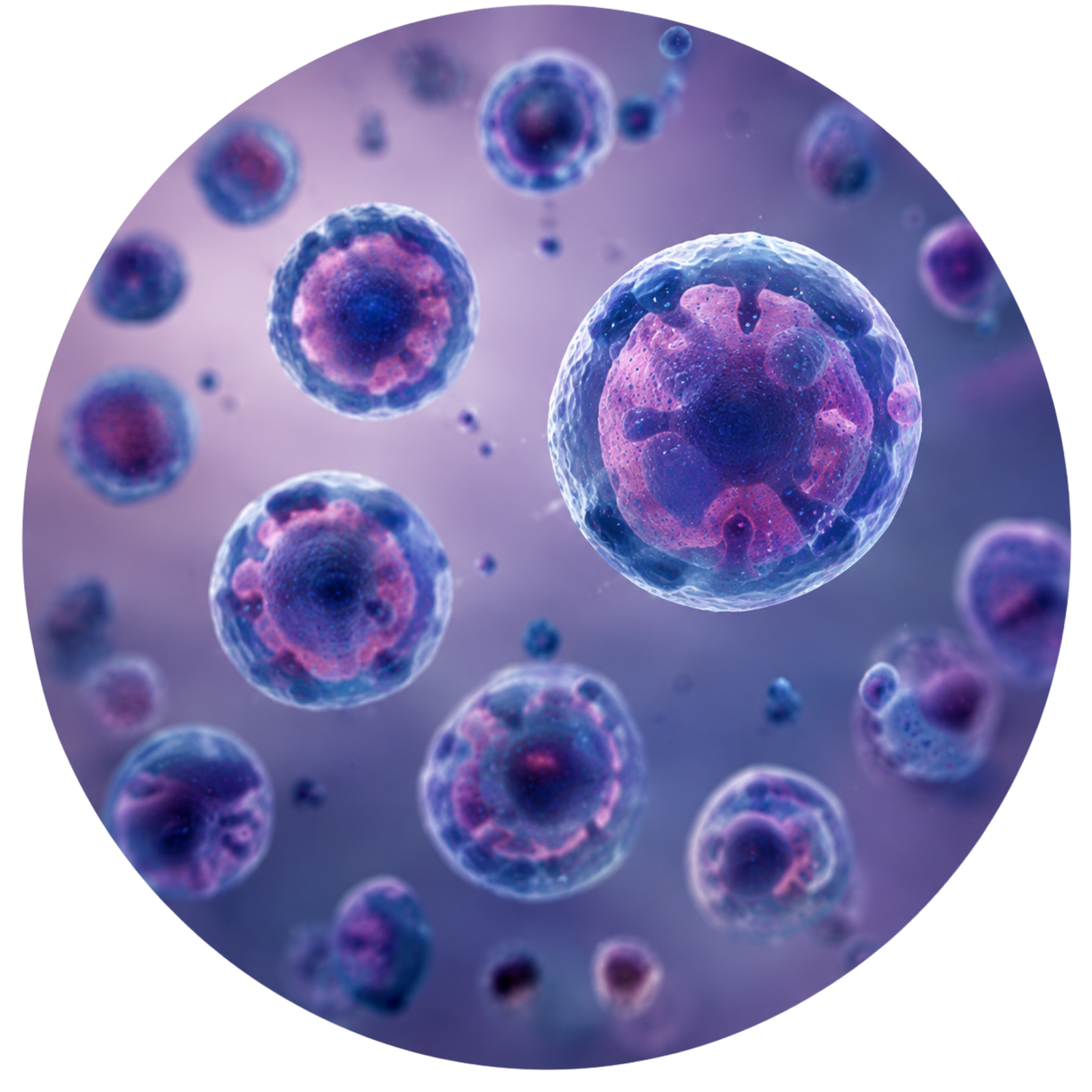
Exosomes are tiny bubbles, thousands of times smaller than a hair's width, that cells release to communicate. Each one carries a package of proteins, genetic messages (RNA) and growth signals that can influence how nearby cells behave.
In exosome therapy, a lab-prepared exosome solution is placed in the scalp. The idea is to deliver signals that may encourage weakening follicles to stay in their growth phase longer.
Molecules that take part in repair and renewal.
Messengers linked to the hair growth cycle.
Instructions that can change how a cell behaves.
A protective membrane that holds the cargo.
They contain no living cells, so they cannot grow, divide or turn into hair.
Stem cell based treatments are a separate option. See stem cell therapy
Before you decide, we tell you which exosome product we use, where it comes from and how it is prepared, so you can make an informed choice.
Illustration of the aim of treatment. Response differs from person to person.
Hair loss often starts with follicles that spend less time growing and more time resting. Early research suggests exosome signals may help support these follicles, while larger studies are still under way.
A session usually takes 30 to 45 minutes. Unlike PRP, there is no blood draw, and there is no surgery or bandage.
Your doctor examines your scalp, reviews your medical history and confirms that exosomes make sense for you.
The scalp is cleaned and disinfected carefully before treatment.
A numbing cream can be applied first, so the session feels more comfortable.
The exosome solution is placed in thinning areas with fine micro-injections or microneedling, as your doctor advises.
You leave with simple instructions and can usually return to your day straight away.
Exosomes can only work with follicles that are still alive. They are usually considered when thinning is active, or when simpler treatments have not given the response you hoped for.
Not sure if you qualify? Send photos of your hairline, top and crown on WhatsApp. We will tell you honestly whether exosomes, PRP or another option makes sense for you. Ask us ↗
Sessions are usually 4–6 weeks apart. Progress is reviewed with photos around month 6.
We take photos at the same angles and lighting before treatment and at each review, with close-up scalp images where helpful, so changes are judged fairly, not from memory.
Hair grows slowly, so any change from exosome therapy takes time to show. We plan a short course, then review your progress with clear photos before suggesting anything more.
Usually 4–6 weeks apart, depending on your scalp.
We compare your photos and decide together on next steps.
Only if your response suggests it is worth continuing.
Our honest summary of the evidence for exosomes in hair loss today.
Exosome therapy for hair is still being studied, and products vary in how they are made. That is why we screen every patient, explain the product we use, and never present exosomes as a guaranteed or proven cure.
| Effect | How common | Usually lasts |
|---|---|---|
| Redness at treated points | Common | A few hours to 1 day |
| Tenderness | Common | 1–2 days |
| Slight temporary swelling | Uncommon | 1–3 days |
| Small bruises | Uncommon | 3–7 days |
| Sensitivity reaction | Rare | Tell us straight away |
A transplant restores hair in thinning areas, but the native hair around it can keep thinning. Some patients choose exosome sessions after surgery to support that surrounding hair and the scalp as it recovers.
May help support existing hair around the grafts.
Research is exploring its role in healing and calming the scalp.
A comfortable option in the weeks after surgery.
Timed by your surgeon alongside PRP or mesotherapy.
Exosome sessions are spaced weeks apart, so they fit well around visits to Amman. Your assessment starts on WhatsApp, before you book any travel.
Send my photos ↗Hairline, top, crown and the back of your head, on WhatsApp.
We tell you if exosomes are worth considering, or if another option suits you better.
With sessions 4–6 weeks apart, we match the course to your travel dates.
Share progress photos and keep in touch in Arabic or English.
The questions patients ask us most. Your own plan always follows a personal assessment.
↗Still have a question?Exosomes are tiny vesicles that cells naturally release to send signals to other cells. They carry proteins, genetic messages (RNA) and growth signals. They are not living cells, so they cannot grow, divide or turn into hair.
Not yet. Laboratory studies and small early studies in people are encouraging, but large, long-term controlled trials are still limited. We present exosomes as an emerging option, never as a guaranteed or proven cure, and results vary from person to person.
They are prepared in a laboratory from cell cultures; they are not taken from your own body. Products differ in their source and how they are made, so we tell you which product we use, where it comes from and how it is prepared before you decide.
PRP uses growth factors from your own blood, so it needs a blood draw, and it is the most studied of the two. Exosomes are lab-prepared signalling vesicles, so no blood is drawn, but the evidence is earlier-stage. Your doctor can explain which suits you, or whether combining them makes sense.
Most people feel light pinpricks or pressure. A numbing cream can be applied beforehand to make the session more comfortable, and it is usually well tolerated.
Most plans involve 3 to 4 sessions, usually 4 to 6 weeks apart. We review your progress with photos around month 6, and only suggest maintenance if your response makes it worthwhile.
Hair grows slowly. Some patients notice less shedding after 2 to 3 months, while changes in thickness are easier to judge between months 4 and 6. Some people respond less than others.
Temporary redness, tenderness, slight swelling or small bruises at the treated points are possible and usually settle within days. Sensitivity reactions are rare. We screen your medical history first, and you should contact us if anything gets worse instead of better.
Yes, once the scalp has healed, usually from around 2 to 6 weeks after surgery. Some patients use it to support the native hair around their grafts. It is optional, and your surgeon decides the timing.
Often, yes. Exosomes may be combined with PRP, mesotherapy, or medication such as minoxidil when appropriate. Your doctor decides whether a combination suits your scalp.
Send clear photos of your hairline, crown and thinning areas. Our team will explain your options honestly, including when a simpler or proven treatment is the better first step.
Information on this page is for education and does not replace a medical consultation. Exosome therapy for hair loss is an emerging treatment and research is still developing. Suitability, treatment plan and expected results are decided by your doctor after examination. Results vary from person to person and cannot be guaranteed. All procedures carry risks, which we explain before treatment.