What Is Hair Loss?
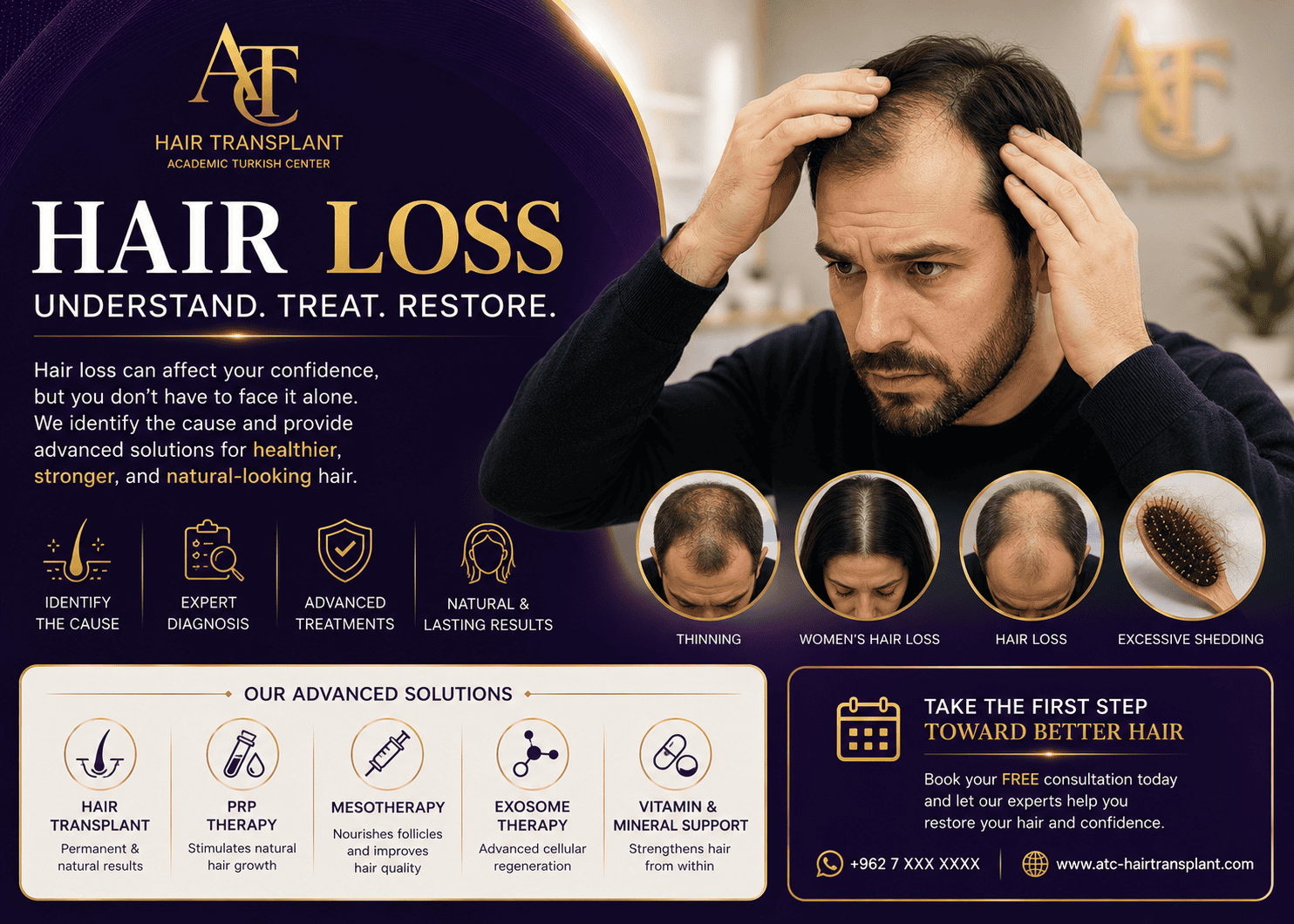
Hair loss is one of the most common concerns affecting both men and women worldwide. While losing 50 to 100 hairs per day is considered a normal part of the hair growth cycle, excessive shedding or gradual thinning may indicate an underlying condition that requires attention.
Hair loss can occur suddenly or develop gradually over time. It may affect only the scalp or the entire body and can range from mild thinning to complete baldness. Understanding the cause of your hair loss is the first step toward choosing the most effective treatment.
At ATC Hair Transplant, our specialists perform a comprehensive hair and scalp assessment to identify the underlying cause of hair loss and recommend the most suitable treatment plan.
Understanding the Hair Growth Cycle
Healthy hair continuously grows, rests, sheds, and regenerates through a natural cycle consisting of three phases:
Anagen Phase (Growth Phase)
This is the active growth stage, during which hair grows continuously for 2 to 7 years. Approximately 85–90% of your hair is in this phase at any given time.
Catagen Phase (Transition Phase)
This short phase lasts about 2–3 weeks. Hair growth slows, and the follicle begins to shrink.
Telogen Phase (Resting Phase)
During this stage, the hair remains in place before naturally shedding. After the old hair falls out, a new hair begins growing from the same follicle.
Disruptions to this cycle can lead to noticeable hair thinning or excessive hair shedding.
Common Causes of Hair Loss
Hair loss can result from many different factors. Identifying the underlying cause is essential for successful treatment.
Genetics
The most common cause is Androgenetic Alopecia, also known as hereditary hair loss or pattern baldness.
In men, this often appears as:
- Receding hairline
- Thinning crown
- Progressive baldness
In women, it usually presents as:
- Overall thinning
- Widening part line
- Reduced hair volume
Hormonal Changes
Hormonal fluctuations can significantly affect hair growth. Common causes include:
- Pregnancy
- Childbirth
- Menopause
- Polycystic Ovary Syndrome (PCOS)
- Thyroid disorders
Stress
Physical or emotional stress may trigger a condition called Telogen Effluvium, causing excessive hair shedding several weeks or months after the stressful event. Common triggers include:
- Surgery
- Illness
- High fever
- Emotional trauma
- Rapid weight loss
Fortunately, this type of hair loss is often temporary.
Nutritional Deficiencies
Healthy hair requires proper nutrition. Low levels of the following nutrients may contribute to hair thinning:
- Iron
- Vitamin D
- Zinc
- Biotin
- Protein
- Vitamin B12
A balanced diet supports healthy hair growth and scalp health.
Medical Conditions
Certain health conditions may contribute to hair loss, including:
- Thyroid disease
- Alopecia Areata
- Lupus
- Diabetes
- Autoimmune disorders
- Scalp infections
Treating the underlying medical condition is often the first step toward improving hair growth.
Medications
Some medications may cause temporary hair loss as a side effect. Examples include treatments for:
- High blood pressure
- Depression
- Cancer
- Arthritis
- Heart disease
Never stop taking prescribed medication without consulting your doctor.
Signs You Should Not Ignore
Consult a hair restoration specialist if you notice:
- Hair falling out in large amounts
- Visible thinning of the scalp
- Receding hairline
- Patchy bald spots
- Sudden hair shedding
- Excessive hair on your pillow or shower drain
- Reduced hair density over time
Early diagnosis often leads to better treatment outcomes.
Is Hair Loss Permanent?
Not all hair loss is permanent. Temporary hair loss caused by stress, illness, or nutritional deficiencies often improves once the underlying issue is addressed.
Permanent hair loss, particularly genetic hair loss, usually requires medical treatment or hair transplantation to restore lost hair.
A professional evaluation can determine whether your hair follicles remain active or have permanently stopped producing hair.
How Is Hair Loss Diagnosed?
At ATC Hair Transplant, every patient undergoes a thorough consultation before treatment begins. Your assessment may include:
- Medical history review
- Scalp examination
- Hair density analysis
- Donor area evaluation
- Hair loss pattern assessment
- Discussion of lifestyle and family history
This personalized approach allows our specialists to recommend the most effective treatment for your condition.
Treatment Options for Hair Loss
Treatment depends on the cause and severity of your hair loss.
Hair Transplant
For permanent hair loss, a Sapphire FUE Hair Transplant offers a long-lasting solution by relocating healthy follicles to thinning or bald areas. Benefits include:
- Permanent results
- Natural appearance
- Minimal scarring
- Faster recovery
- High graft survival
PRP Therapy
Platelet-Rich Plasma (PRP) uses your body's own growth factors to stimulate weakened hair follicles and encourage healthier hair growth. PRP is particularly effective for:
- Early-stage thinning
- Supporting transplanted hair
- Strengthening existing hair
Mesotherapy
Mesotherapy delivers vitamins, minerals, amino acids, and growth factors directly into the scalp to nourish hair follicles and improve hair quality.
Exosome Therapy
Exosome Therapy is an advanced regenerative treatment that supports scalp health and helps strengthen existing hair by promoting cellular repair. It is commonly used alongside other hair restoration treatments for enhanced results.
Lifestyle Improvements
Simple lifestyle changes can also help improve hair health. These include:
- Eating a balanced diet
- Managing stress
- Getting enough sleep
- Avoiding smoking
- Staying hydrated
- Using gentle hair care products
Can Hair Loss Be Prevented?
Although genetic hair loss cannot always be prevented, adopting healthy habits can help reduce unnecessary hair shedding. To support healthy hair:
- Eat a nutrient-rich diet.
- Avoid excessive heat styling.
- Limit harsh chemical treatments.
- Protect your scalp from excessive sun exposure.
- Treat medical conditions promptly.
- Seek professional advice at the first signs of thinning.
Early intervention often leads to the best outcomes.
Why Choose ATC Hair Transplant?
At ATC Hair Transplant, we believe that successful hair restoration begins with understanding the cause of your hair loss — not simply treating the symptoms.
Our experienced Turkish medical team combines advanced diagnostic techniques, Sapphire FUE technology, regenerative therapies, and personalized treatment plans to deliver natural, long-lasting results tailored to every patient.
Whether you are experiencing early thinning or advanced hair loss, we are committed to helping you regain healthy hair and renewed confidence.
Frequently Asked Questions
Is losing hair every day normal?
Yes. Most people naturally lose 50–100 hairs per day as part of the normal hair growth cycle.
Can stress cause hair loss?
Yes. Physical or emotional stress can trigger temporary hair shedding known as Telogen Effluvium.
Does wearing hats cause hair loss?
No. Wearing a clean, properly fitting hat does not cause permanent hair loss.
Can women experience hair loss?
Absolutely. Female hair loss is common and may result from genetics, hormonal changes, pregnancy, menopause, or medical conditions.
When should I see a specialist?
If you notice persistent thinning, excessive shedding, bald patches, or changes in your hairline, it's best to seek a professional evaluation as early as possible.