Why Hair Care and Nutrition Matter
Healthy, beautiful hair starts from within. While genetics play a significant role in hair growth, your daily habits, diet, and hair care routine have a major impact on the strength, thickness, and overall health of your hair.
Many people focus only on external treatments, but healthy hair depends on proper nutrition, a healthy scalp, and consistent care. Even after a successful hair transplant, maintaining healthy hair requires the right balance of nutrients and a gentle hair care routine.
At ATC Hair Transplant, we believe that long-term hair health combines professional treatments with healthy lifestyle choices to help you achieve stronger, fuller, and healthier hair.
How Nutrition Affects Hair Growth
Hair follicles are among the most active cells in the human body. They require a constant supply of vitamins, minerals, proteins, and oxygen to produce healthy hair.
Poor nutrition can lead to:
- Excessive hair shedding
- Weak hair strands
- Slow hair growth
- Dry or brittle hair
- Reduced hair density
A balanced diet supports healthy hair follicles and encourages continuous hair growth.
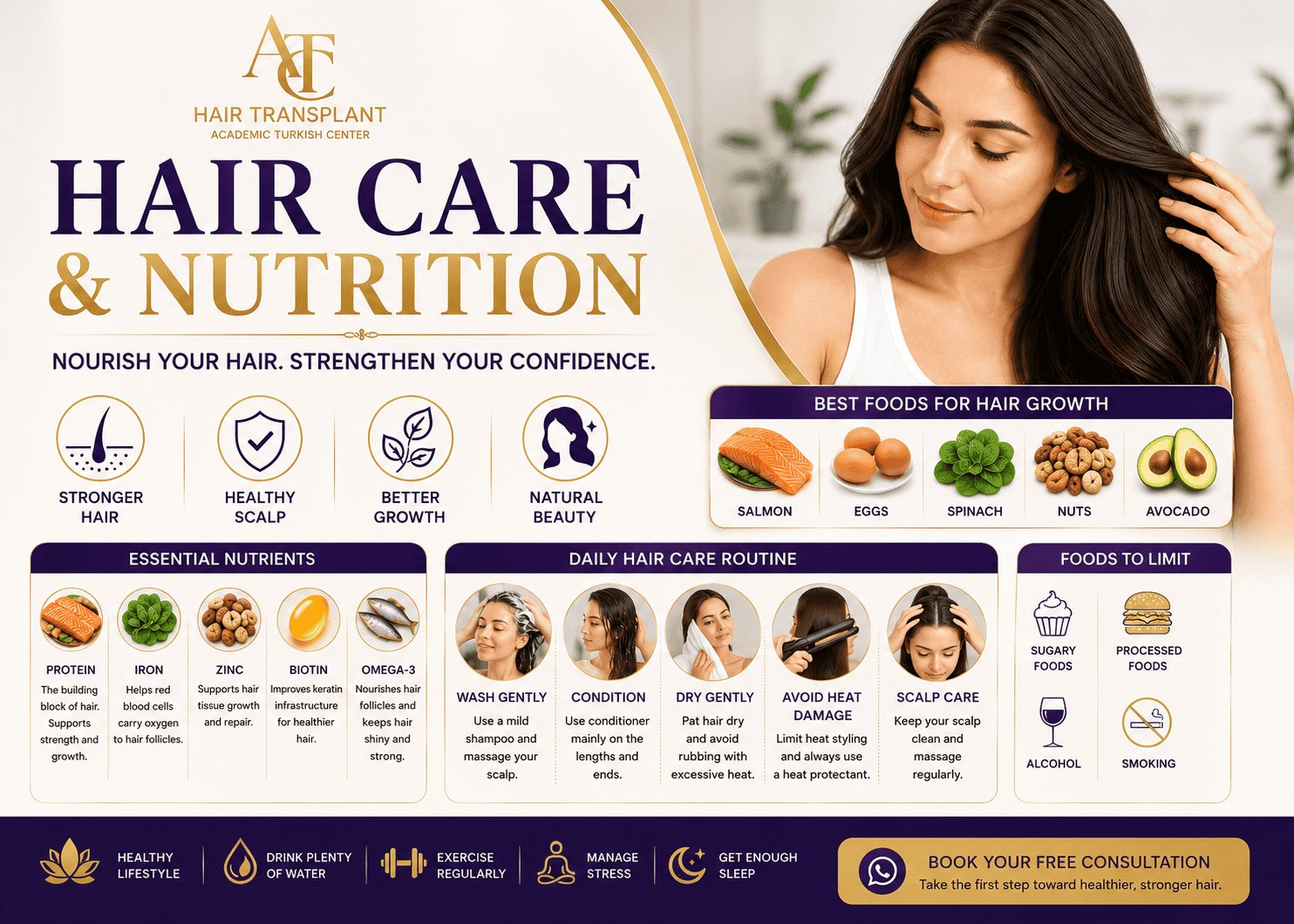
Essential Nutrients for Healthy Hair
Protein
Hair is primarily made of a protein called keratin. Without enough protein, hair becomes weak, thin, and prone to breakage. Excellent protein sources include:
- Chicken
- Fish
- Eggs
- Greek yogurt
- Lentils
- Beans
- Lean beef
Iron
Iron helps transport oxygen to hair follicles. Iron deficiency is one of the most common causes of hair thinning, especially in women. Iron-rich foods include:
- Spinach
- Red meat
- Liver
- Lentils
- Chickpeas
- Pumpkin seeds
Vitamin D
Vitamin D supports healthy hair follicle function and may play a role in the natural hair growth cycle. Sources include:
- Sunlight
- Fatty fish
- Egg yolks
- Fortified dairy products
Zinc
Zinc helps repair damaged tissues and supports healthy hair growth. Good sources include:
- Nuts
- Seeds
- Shellfish
- Whole grains
Biotin (Vitamin B7)
Biotin contributes to healthy hair, skin, and nails. Although true biotin deficiency is uncommon, maintaining adequate levels supports normal hair health. Foods rich in biotin include:
- Eggs
- Almonds
- Walnuts
- Sweet potatoes
- Mushrooms
Omega-3 Fatty Acids
Omega-3 fats nourish the scalp and support healthy, shiny hair. Healthy sources include:
- Salmon
- Sardines
- Chia seeds
- Flaxseeds
- Walnuts
Best Foods for Hair Growth
A healthy diet can naturally improve hair quality over time. Some of the best foods include:
- Salmon
- Eggs
- Spinach
- Avocados
- Berries
- Sweet potatoes
- Nuts
- Seeds
- Greek yogurt
- Citrus fruits
- Beans
- Oats
These foods provide a combination of vitamins, minerals, healthy fats, and antioxidants that nourish both your scalp and hair follicles.
Foods to Limit
Certain eating habits may negatively affect hair health. Try to reduce:
- Excess sugary foods
- Highly processed meals
- Trans fats
- Excessive alcohol
- Smoking
- Frequent crash diets
Maintaining a balanced diet is far more beneficial than relying on restrictive eating plans.
Daily Hair Care Routine
Healthy hair also depends on proper daily care.
Wash Your Hair Correctly
- Use a gentle shampoo suitable for your hair type.
- Wash with lukewarm water.
- Avoid excessive shampooing if your scalp is dry.
- Massage the scalp gently with your fingertips.
Condition Your Hair
A quality conditioner helps:
- Reduce breakage
- Improve moisture
- Protect hair from damage
- Increase softness
Apply conditioner mainly to the mid-lengths and ends of your hair.
Dry Hair Gently
Avoid rubbing your hair aggressively with a towel. Instead:
- Pat dry with a soft microfiber towel.
- Allow hair to air dry whenever possible.
- Use a cool or low-heat hair dryer if necessary.
Avoid Excessive Heat Styling
Frequent use of hair straighteners, curling irons, and high-temperature blow dryers can weaken the hair shaft and increase breakage. Always use a heat protectant before styling.
Scalp Health Matters
Healthy hair grows from a healthy scalp. To maintain a healthy scalp:
- Keep it clean.
- Avoid harsh chemical products.
- Protect it from excessive sun exposure.
- Stay hydrated.
- Treat dandruff or scalp conditions early.
- Massage the scalp regularly to encourage circulation.
Hair Care After a Hair Transplant
If you have undergone a hair transplant, proper aftercare is essential. For the first few weeks:
- Follow your specialist's washing instructions.
- Avoid scratching the scalp.
- Use only recommended products.
- Avoid direct sunlight.
- Avoid swimming and heavy exercise until approved.
- Attend all follow-up appointments.
Long-term, continue using gentle hair care products and maintain a healthy lifestyle to protect both transplanted and existing hair.
Healthy Lifestyle Habits
Hair health is influenced by your overall well-being. Support stronger hair by:
- Sleeping 7–9 hours each night.
- Drinking plenty of water.
- Exercising regularly.
- Managing stress.
- Avoiding smoking.
- Limiting alcohol consumption.
These habits improve circulation and help nourish your hair follicles.
Common Hair Care Mistakes
Avoid these habits that may contribute to hair damage:
- Washing with very hot water.
- Tight hairstyles that pull on the hair.
- Excessive bleaching or chemical treatments.
- Overusing styling products.
- Skipping conditioner.
- Brushing wet hair aggressively.
Small changes to your routine can make a significant difference over time.
Frequently Asked Questions
Can vitamins alone stop hair loss?
Vitamins support healthy hair, but they cannot reverse permanent genetic hair loss. If you're experiencing persistent thinning, it's important to identify the underlying cause.
How often should I wash my hair?
It depends on your hair type. Most people benefit from washing 2–4 times per week, while oily hair may require more frequent cleansing.
Does drinking more water help hair growth?
Proper hydration supports overall scalp and hair health, although water alone does not directly increase hair growth.
Are natural oils good for hair?
Some natural oils, such as argan oil or coconut oil, can improve moisture and reduce breakage. However, they should complement — not replace — a balanced hair care routine.
Can diet improve hair after a transplant?
Yes. A nutrient-rich diet supports healing, strengthens existing hair, and contributes to healthy long-term results.
Why Choose ATC Hair Transplant?
At ATC Hair Transplant, we understand that healthy hair is the result of expert medical care, proper nutrition, and consistent daily maintenance. Our Turkish medical team provides personalized guidance before and after treatment, helping patients build healthy habits that support stronger hair and long-lasting results.
Whether you're preventing hair loss, recovering from a hair transplant, or simply looking to improve your hair's overall condition, we're here to support you every step of the way.