Your body's own healing power, concentrated and redirected to your scalp.
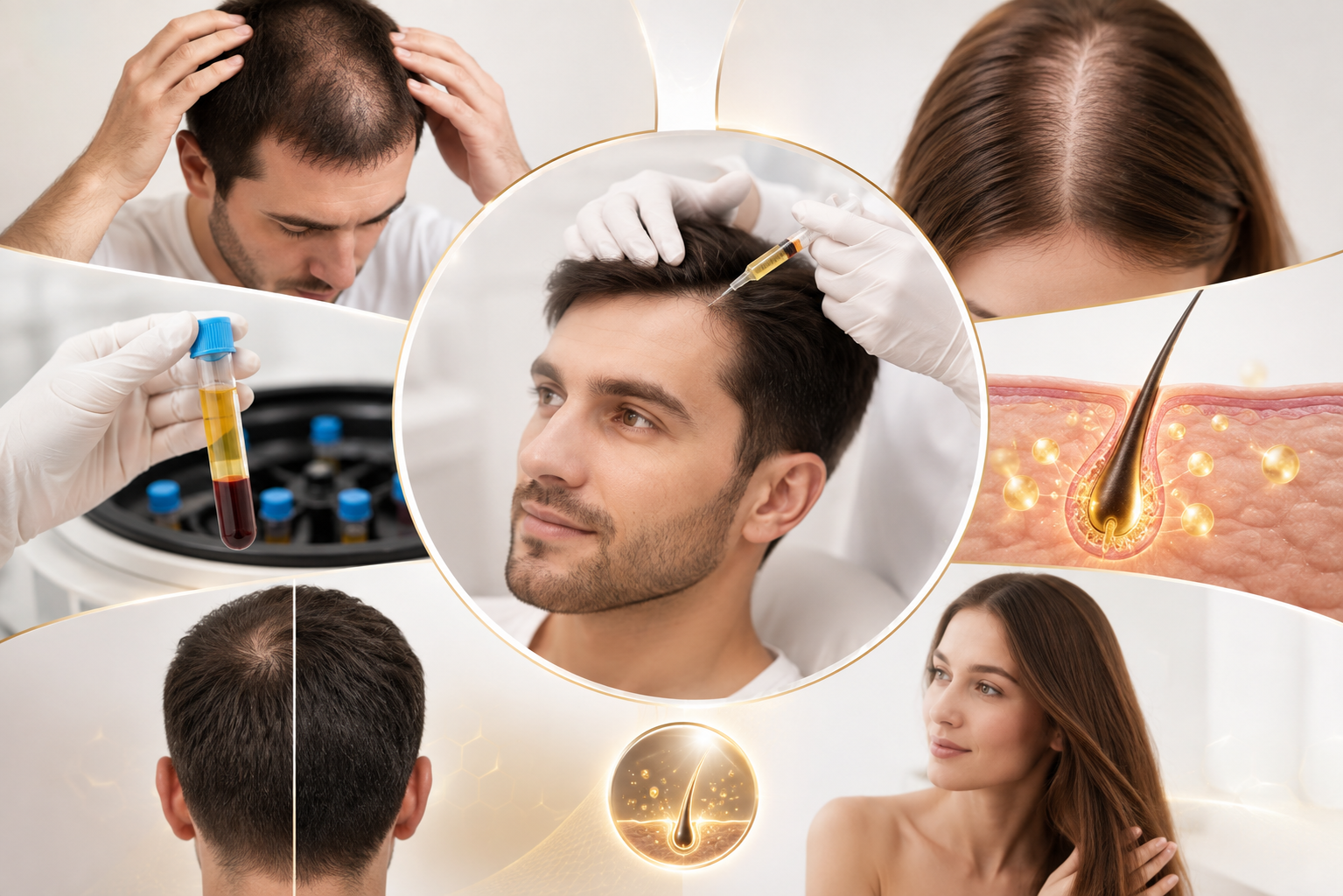
PRP Therapy is an advanced, non-surgical treatment that uses your body's own healing power to combat hair loss and stimulate natural hair regrowth.
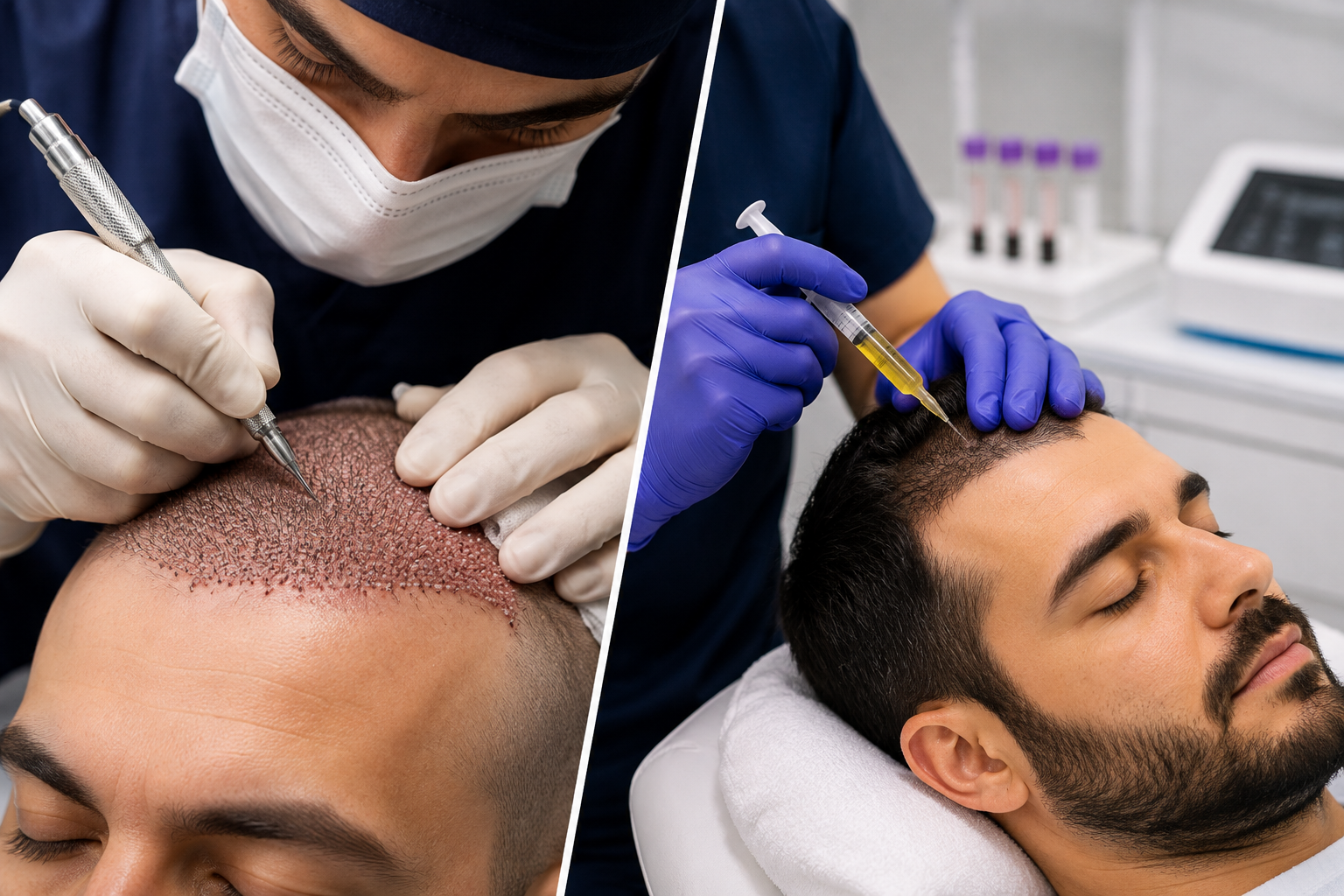
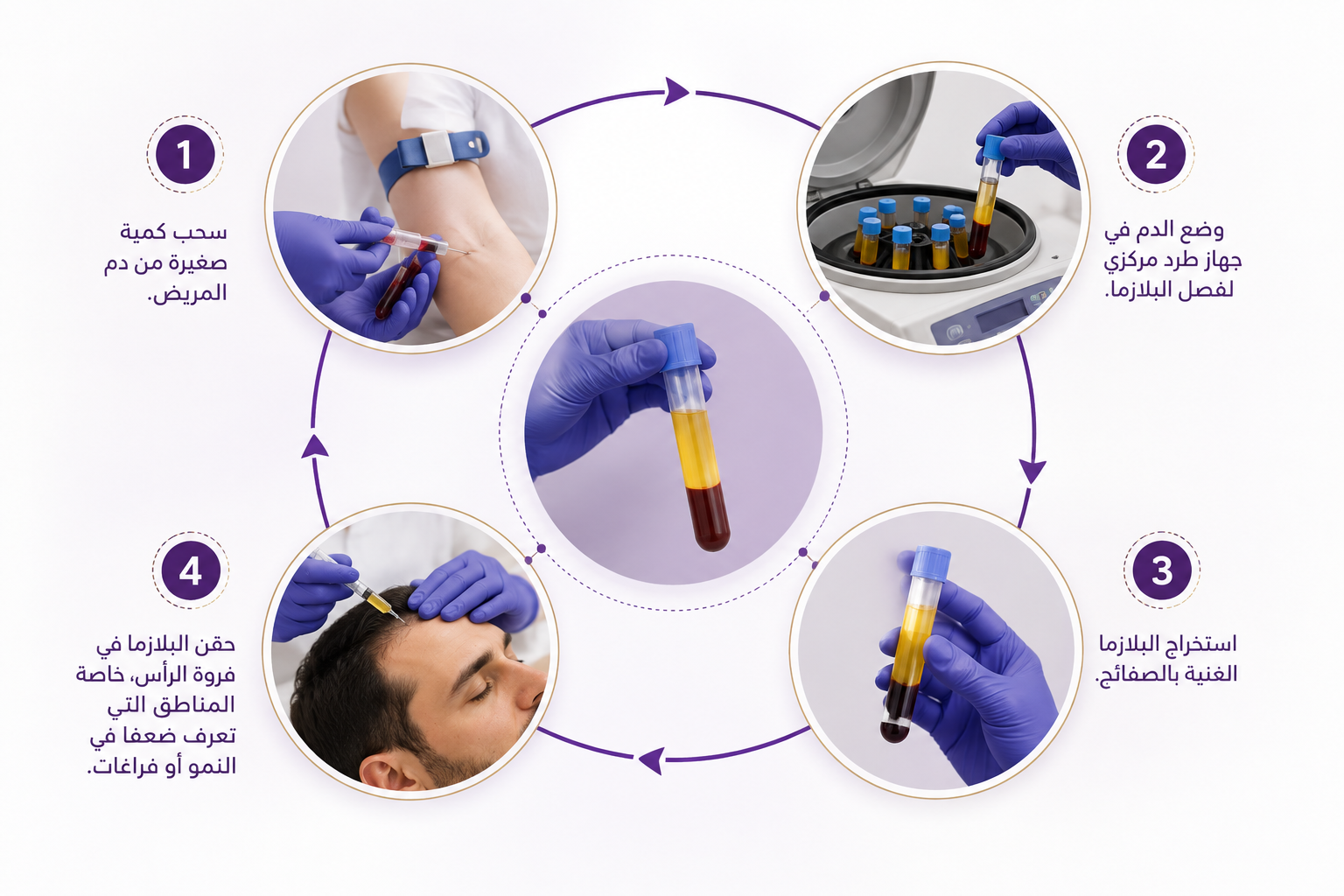
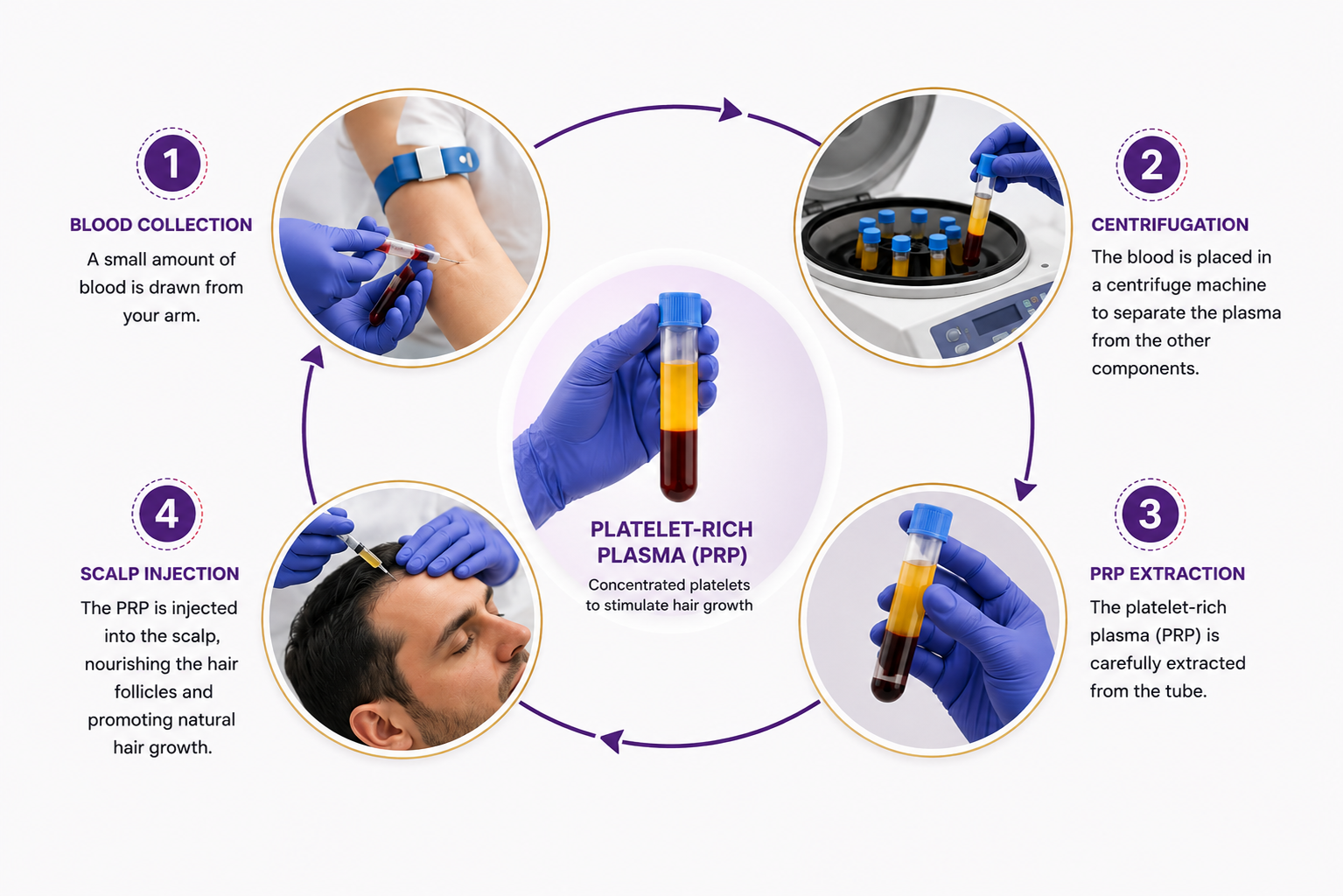
The procedure involves drawing a small sample of your blood, processing it in a centrifuge to concentrate the platelets and growth factors, and then injecting this plasma directly into targeted areas of the scalp. These growth factors activate dormant hair follicles, improve blood circulation, and extend the hair's natural growth cycle.
Key Benefits
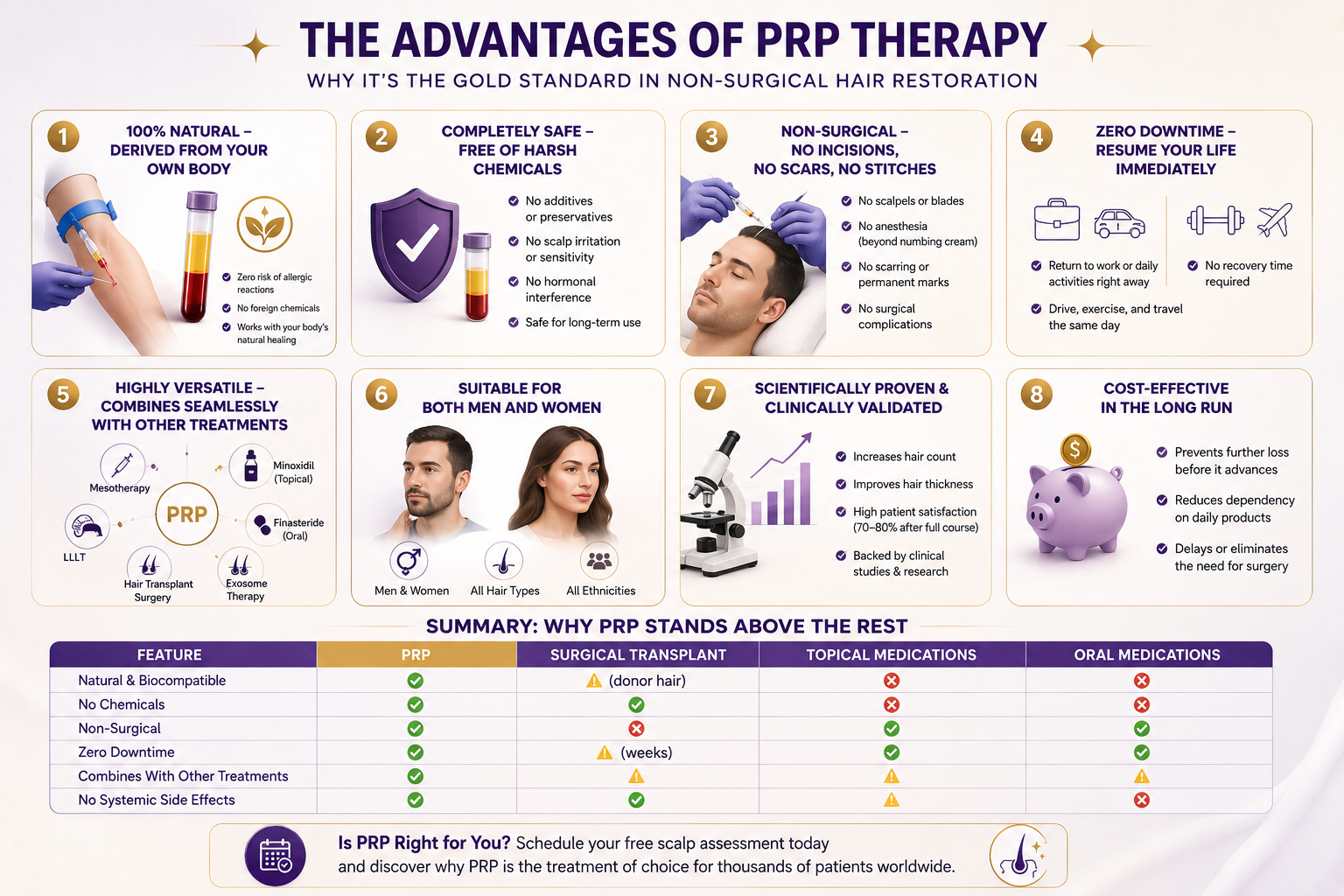
100% natural and biocompatible (uses your own blood)
Strengthens weak follicles and reduces shedding
Stimulates new hair growth in thinning areas
Improves overall hair thickness and quality
No surgery, no scars, and zero downtime
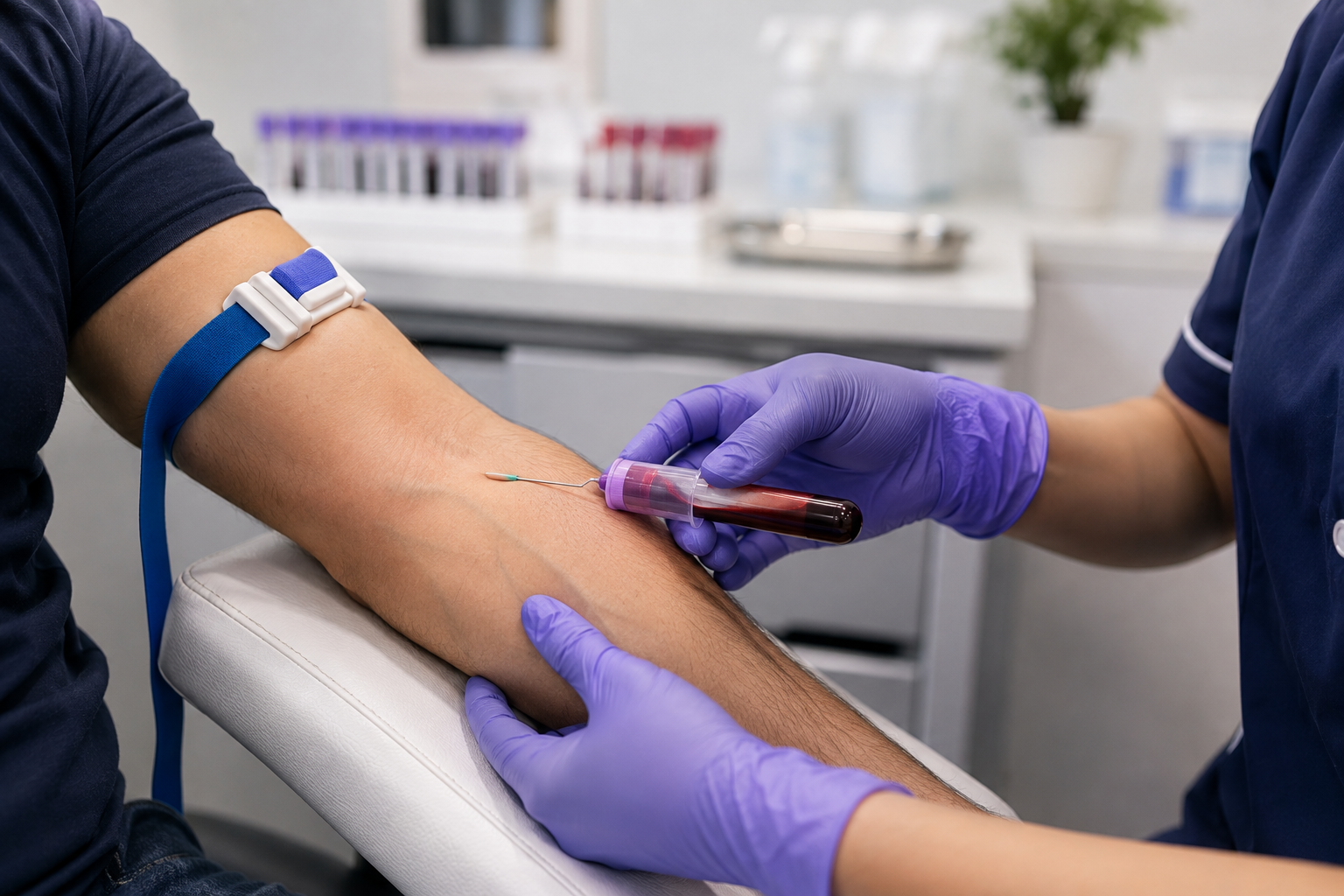
1. Blood Draw
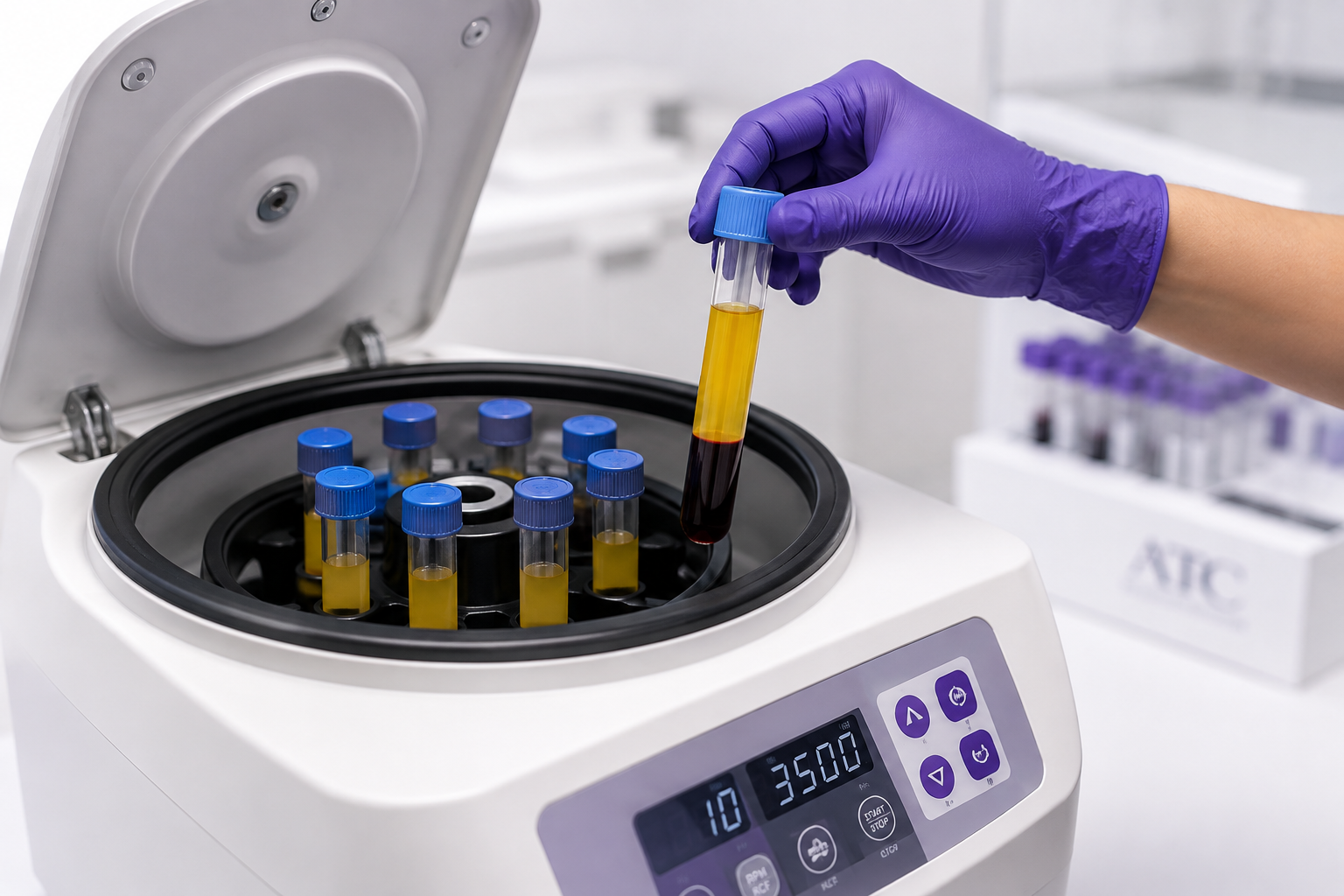
2. Plasma Separation
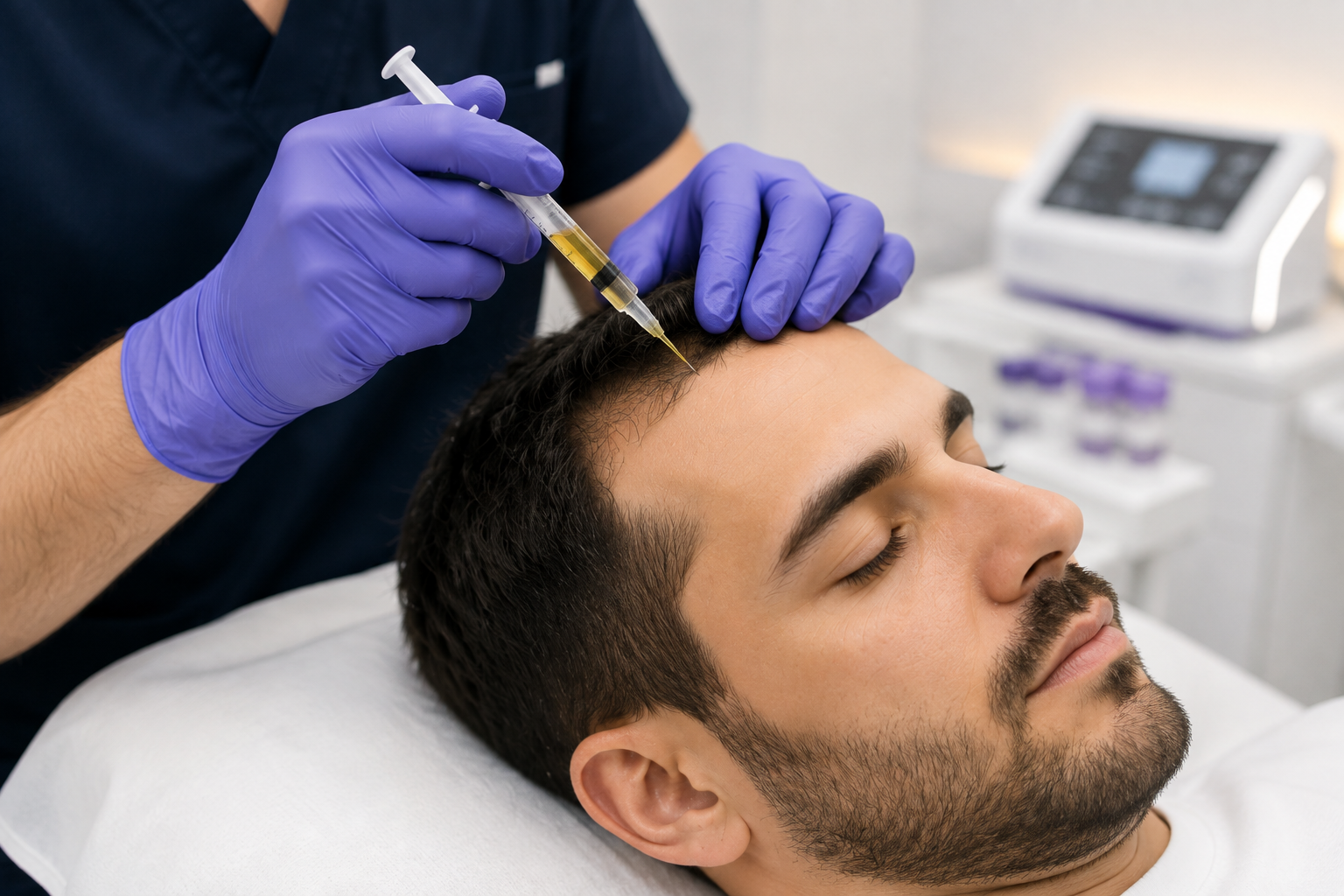
3. Scalp Injection
Why Use PRP For Hair Loss?
Scientifically Proven, Root-Cause Treatment
PRP is scientifically proven to be one of the most effective non-surgical treatments for hair restoration because it addresses the root cause of hair thinning at the cellular level.
Follicle Reactivation: Wakes up dormant or miniaturized follicles
Scalp Revitalization: Improves microcirculation and creates an optimal environment for hair growth
Inflammation Reduction: Calms scalp inflammation that contributes to hair loss
Ideal For
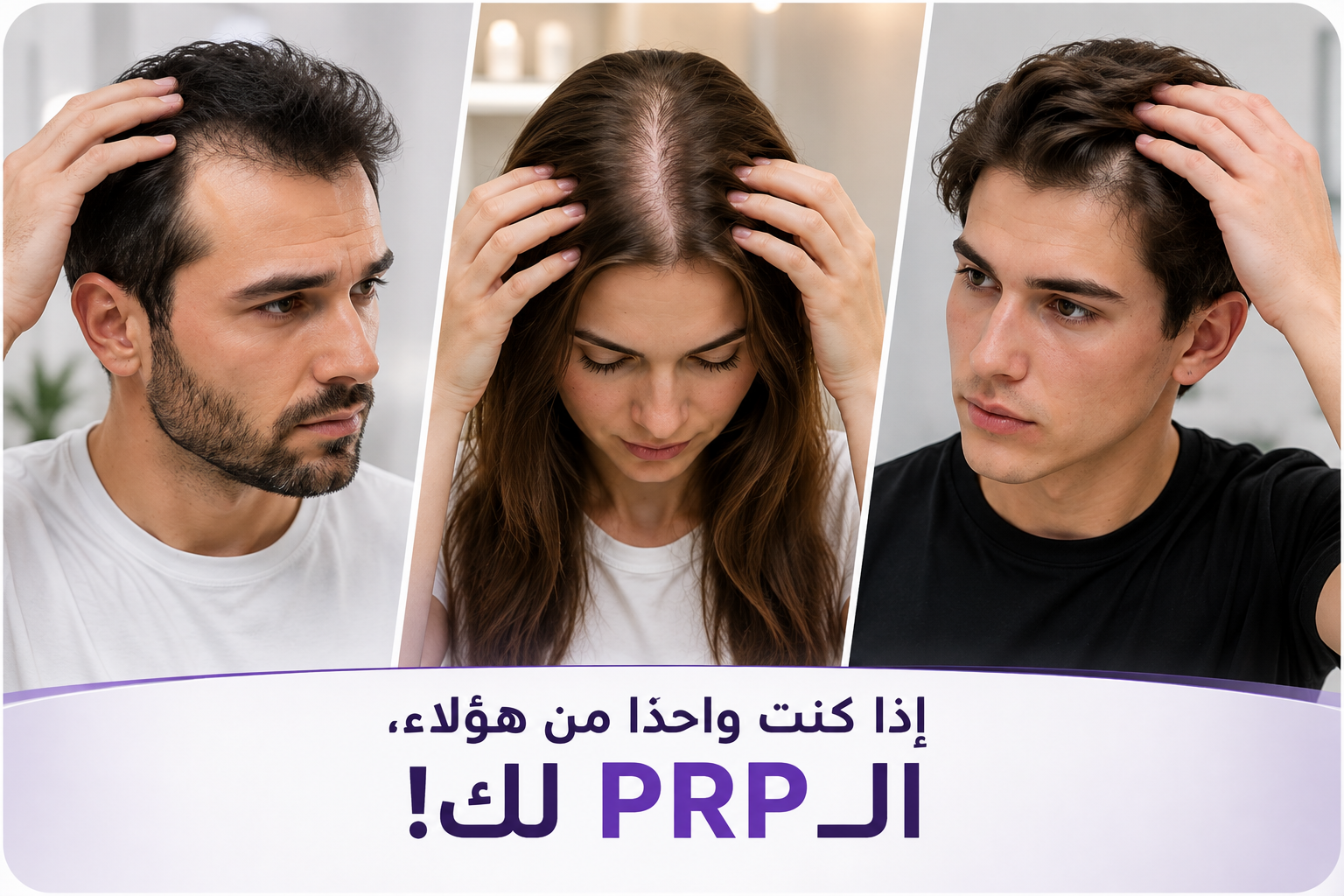
Men and women with early to moderate hair thinning
Androgenetic alopecia (pattern hair loss)
Seasonal or stress-related hair shedding
Post-hair transplant recovery and enhancement
Those seeking a natural alternative to medications
Before
After
PRP & Hair Transplant Surgery
What's The Role Of PRP In Hair Transplant Surgery?
This is where PRP truly proves its power. Beyond standalone hair restoration, PRP plays a critical supportive role in maximizing the success of hair transplant procedures. Multiple clinical studies confirm that post-transplant PRP therapy significantly enhances outcomes.
Accelerating Healing — Speeds up recovery of both donor and recipient areas
Reducing Inflammation & Itching — Minimizes post-operative discomfort and irritation
Boosting Graft Survival Rate — Increases the percentage of transplanted follicles that successfully take root
Enhancing Final Density — Delivers visibly thicker, fuller results within the first 6 months
💡 At ATC Hair Transplant, PRP is included complimentary as part of your post-operative care plan. We believe that surgical excellence is only half the equation—true success is defined by what happens after the transplant.
The Treatment Session
What Happens During A PRP Treatment Session?
A PRP session is a simple, comfortable, and efficient procedure that typically takes 45 to 60 minutes from start to finish. There is no surgery involved, no lengthy recovery, and most patients return to their daily routine immediately afterward.
1
Consultation & Scalp Mapping
Before any blood is drawn, our specialist examines your scalp to identify the specific areas of thinning, hairline recession, or weakened follicles. This ensures that every drop of your PRP is delivered precisely where it will have the greatest impact.
2
Blood Collection
A small sample of blood—usually 10 to 20 milliliters (about one to two tablespoons)—is drawn from your arm. The process is identical to a standard blood test and takes only a few moments.
3
Centrifugation & Plasma Separation
Your blood sample is placed into a medical-grade centrifuge, a high-speed spinning device that separates the blood into its distinct layers:
Red blood cells (heaviest, sink to the bottom)
White blood cells and platelet-poor plasma (middle layer)
Platelet-Rich Plasma (PRP) — the golden, concentrated layer we need
This separation process takes approximately 10 to 15 minutes and yields plasma with a platelet concentration 3 to 5 times higher than normal blood.
4
PRP Activation & Preparation
Once isolated, the PRP is carefully extracted and prepared for injection. In some protocols, an activating agent is added to trigger the release of growth factors, maximizing the regenerative potential before it ever touches your scalp.
5
Targeted Scalp Injection
Using ultra-fine needles, the concentrated PRP is injected directly into the superficial layers of the scalp, with special focus on:
Areas of visible thinning or reduced density
Receding hairlines
Bald patches or regions with dormant follicles
The entire scalp for overall revitalization
A topical numbing cream is applied beforehand to ensure the experience is as comfortable as possible. Most patients describe the sensation as mild pressure or tiny pinpricks.
6
Post-Treatment Care & Guidance
Once the injections are complete, you are free to go. There is no downtime, no bandages, and no restrictions on washing your hair after the recommended waiting period (usually 24 hours). Our team will provide you with simple aftercare instructions to protect your scalp and optimize results.
Why The Procedure Is So Effective
The genius of PRP lies in its precision and biological compatibility. Because the treatment uses your own blood, there is virtually zero risk of allergic reaction or rejection. The growth factors released by the concentrated platelets begin working immediately to reduce inflammation around the follicles, stimulate blood flow to the scalp, extend the anagen (growth) phase of the hair cycle, and strengthen existing strands while encouraging new growth.
Is PRP Right For You?
Who Is An Ideal Candidate For PRP Therapy?
PRP therapy is a versatile, inclusive treatment suitable for a wide range of patients. Whether you are just beginning to notice thinning or looking to enhance results from a previous procedure, PRP offers a safe and effective path forward.
1. Genetic Or Seasonal Hair Loss
Androgenetic Alopecia (Pattern Baldness): PRP is clinically proven to slow the progression of hereditary hair loss in both men and women by strengthening follicles under the influence of DHT.
Seasonal Shedding: If you notice increased hair fall during specific times of the year, PRP can help regulate the hair growth cycle and reduce excessive shedding.
2. Thinning Or Low-Density Areas
Diffuse thinning across the crown, top of the head, or temples
A widening part or visible scalp through the hair
Areas where hair has become fine, weak, or brittle
PRP works best when follicles are still alive but miniaturized. If your hair follicles are dormant—not permanently dead—PRP can reactivate them.
3. Undergone A Hair Transplant
Pre-Transplant: PRP can strengthen the donor area and prepare the scalp for surgery.
Post-Transplant: PRP accelerates healing, reduces shock loss, improves graft survival rates, and helps transplanted follicles establish faster for denser, more natural-looking results.
4. Seeking A Natural, Non-Surgical Solution
You prefer treatments derived from your own body rather than synthetic drugs or chemicals
You want to avoid the risks, scars, and recovery time associated with surgery
You are looking for a preventative approach to maintain your existing hair before loss becomes advanced
5. Want To Improve Overall Hair Quality
Even if you are not experiencing significant hair loss, PRP can enhance hair thickness and volume, scalp health and hydration, and the shine and strength of existing strands.
Who Should Consider An Alternative?
While PRP is safe for most people, it may not be suitable if you:
Have a blood clotting disorder or are on heavy blood-thinning medication
Suffer from active scalp infections, psoriasis, or severe dermatitis
Have a history of cancer in the treatment area
Are pregnant or breastfeeding (consultation required)
Not sure if you qualify? The best way to determine your candidacy is through a complimentary scalp assessment. Our specialists will examine your follicle health, assess your hair loss pattern, and honestly advise whether PRP—or another of our advanced treatments—is the right choice for you.
Treatment Protocol
How Many PRP Sessions Do You Need?
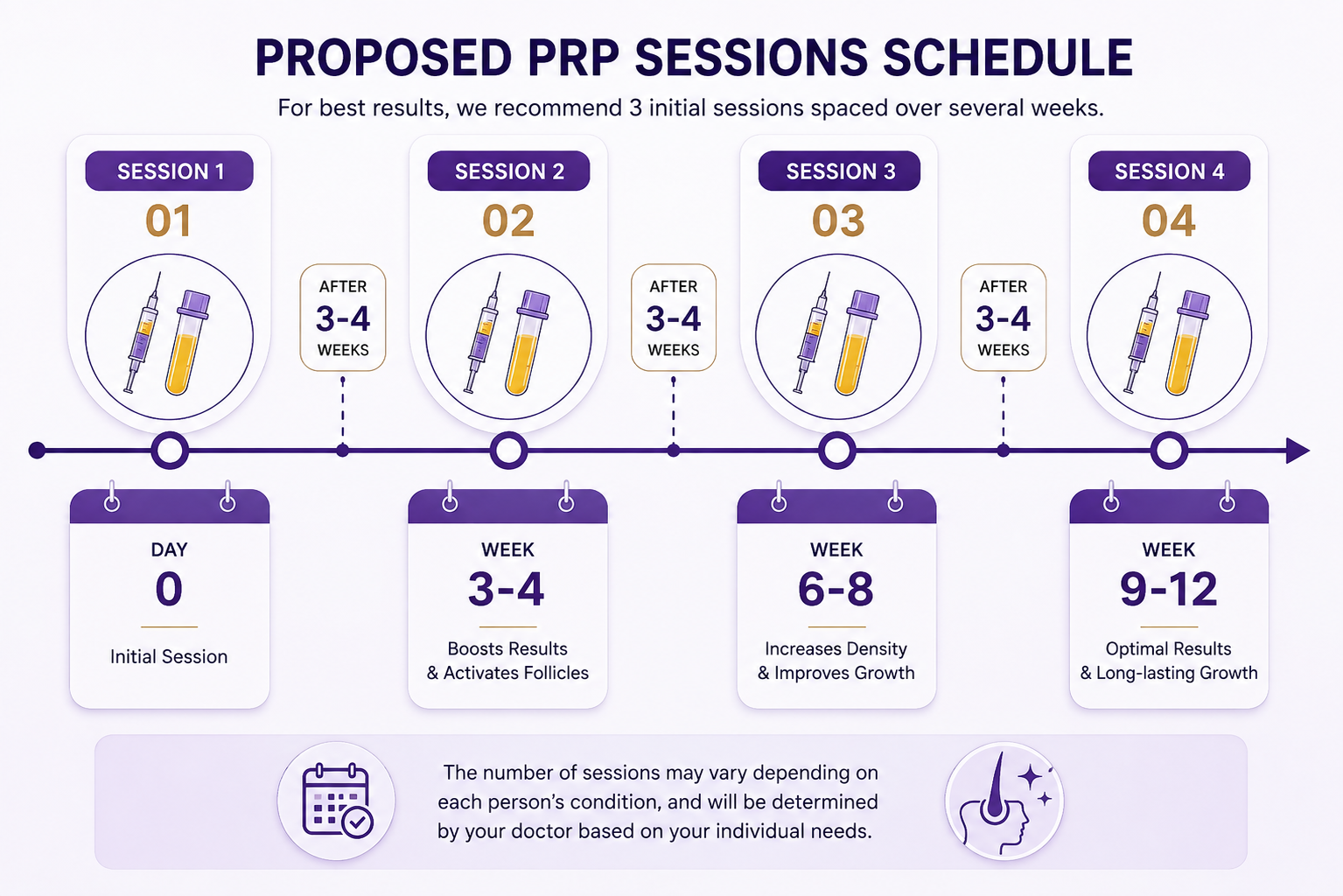
Achieving optimal results with PRP is not a one-time event—it is a structured journey that builds momentum over time. Hair follicles operate on a natural growth cycle, and PRP works by progressively strengthening and reactivating them. Consistency is the key to unlocking the full potential of this therapy.
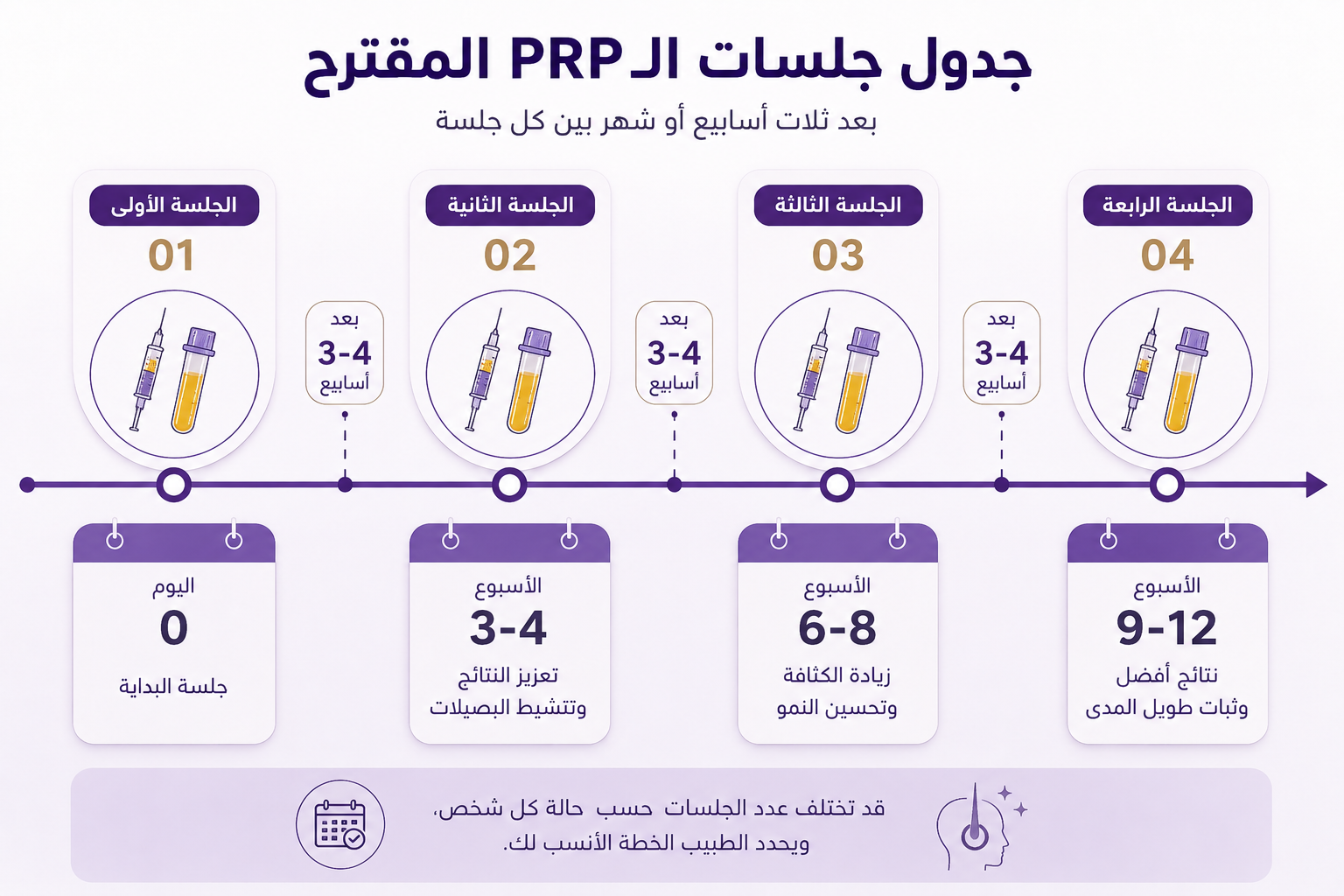
Phase 1: The Initial Intensive Phase (Months 1–3)
This is where the foundation for regrowth is laid — a concentrated surge of growth factors to your scalp.
Number of Sessions
3 to 4 sessions
Interval Between Sessions
Every 2 to 4 weeks
Purpose
Stimulate dormant follicles, reduce shedding, and initiate the regeneration process
Session 1–2: Growth factors begin penetrating the scalp, improving microcirculation and reducing inflammation. You may notice decreased shedding within the first few weeks.
Session 3: Follicles start entering a stronger growth phase. Early signs of fine new hair (vellus hair) may begin to appear in thinning areas.
Session 4 (if needed): Reinforces the initial gains, ensuring deeper penetration and more robust follicle activation.
Why the gap matters: Allowing 2 to 4 weeks between sessions gives your follicles time to respond to the growth signals while maintaining continuous stimulation. Too frequent, and the scalp doesn't rest; too sparse, and the momentum is lost.
Phase 2: The Consolidation Phase (Months 4–6)
Your follicles are actively responding — this period focuses on solidifying gains.
An optional booster session may be recommended at month 4 or 5 for patients with more advanced thinning. This is typically when patients begin to see noticeable thickening and improved hair density in photographs and mirror checks.
Phase 3: The Maintenance Phase (Ongoing)
Once your hair has reached a stronger, healthier state, maintenance sessions preserve those results long-term.
Frequency
Once every 6 to 12 months
Purpose
Sustain results, combat ongoing miniaturization, and maintain scalp health
Customization
Adjusted based on your individual response and hair loss progression
Factors that influence your maintenance schedule: severity of hair loss, age and genetics, lifestyle factors (stress, diet, hormones), and whether you're combining PRP with Mesotherapy, Exosomes, or topical treatments.
Why Consistency Is Non-Negotiable
Think of PRP like a fitness program for your hair. One session provides a temporary boost, but repeated, timed stimulation is what creates lasting structural change. The hair growth cycle operates in three phases: Anagen (growth — PRP extends this phase), Catagen (transition — PRP helps follicles transition without premature shedding), and Telogen (resting — PRP shortens this phase, pushing follicles back into active growth faster). Because each follicle is at a different stage at any given moment, multiple sessions ensure every follicle receives growth signals when it is most receptive.
What if you stop after the initial phase? You will likely retain some benefits—improved scalp health and reduced shedding—for several months. However, without maintenance, the natural progression of hair loss may gradually resume. Maintenance sessions act as a proactive defense, keeping your follicles in an optimal state year after year.
Your personalized plan: At ATC Hair Transplant, we do not believe in generic protocols. After your initial assessment, we design a custom session schedule tailored to your specific type and stage of hair loss, your scalp's response to the first session, and your personal goals and lifestyle.
Expected Results
Your Hair Transformation Timeline
PRP therapy does not deliver overnight miracles—it delivers real, measurable, and progressive improvements that build naturally over time. Because hair grows in cycles, the results unfold in distinct phases across three critical metrics: shedding reduction, hair density, and growth rate.
Hair Shedding
Daily hair fall and breakage. The first sign PRP is working — less shedding means follicles are anchoring stronger.
Hair Density
Thickness and fullness across the scalp. The visible result everyone notices — more hair per square centimeter.
Growth Rate
Speed of new hair emergence and length gain. Indicates follicles have shifted from dormant to active growth phase.
Hair SheddingHair DensityGrowth Rate
Illustrative representation of a typical patient response pattern. Individual results vary.
Week-By-Week Progression
1–2
The Foundation Phase
Shedding: You may notice a slight increase in shedding initially — completely normal, as weak telogen-phase hairs are pushed out to make room for stronger new growth. Density: No visible change yet. Growth Rate: Baseline — biological signals have been sent; follicles are preparing to respond.
2–4
The Turning Point
Shedding: A noticeable drop in daily hair fall (up to 40–50% reduction). Density: Slight textural improvement. Growth Rate: Early activation — some patients report a tingling or warm sensation as circulation improves.
4–8
The Growth Phase
Shedding: Continued decline — typically reduced by 60–70% from baseline by week 8. Density: Visible thickening begins in the crown, temples, and part line; fine new vellus hairs emerge. Growth Rate: Peaks during this window as dormant follicles actively produce hair shafts.
8–12
The Transformation Phase
Shedding: Minimal and stable — healthy shedding of 50–100 hairs per day is normal. Density: Significant improvement; overall hair volume increases noticeably. Growth Rate: Sustained high activity as new hairs mature into thicker, pigmented terminal hairs.
Timeframe
Expected Outcome
Months 3–6
New hairs continue to thicken and darken. Maximum density gains are typically visible by month 6.
Months 6–9
Hair quality reaches its peak — stronger, shinier, and more resilient. Scalp health is optimized.
Months 9–12
Full results stabilized. Maintenance sessions ensure these gains are preserved long-term.
✅ PRP Can
Significantly reduce hair shedding and breakage
Increase hair density in areas with living but weak follicles
Improve hair texture, shine, and strength
Slow or halt the progression of pattern hair loss
Enhance results when combined with other treatments
❌ PRP Cannot
Regrow hair in areas where follicles are completely dead or scarred
Deliver identical results for every patient
Replace the need for maintenance in progressive conditions
The Golden Rule: the earlier you start PRP, the better your results. Treating thinning hair is far more effective than trying to revive bald patches.
How To Maximize Your Results
Follow your session schedule — skipping or delaying sessions breaks the momentum
Use prescribed scalp care products — medical-grade shampoos and serums complement PRP's effects
Maintain a nutrient-rich diet — protein, iron, zinc, and biotin support follicle health from within
Manage stress levels — cortisol is a known hair loss trigger
Avoid smoking and excessive alcohol — both impair circulation and slow healing
Safety First
Are There Any Contraindications Or Side Effects?
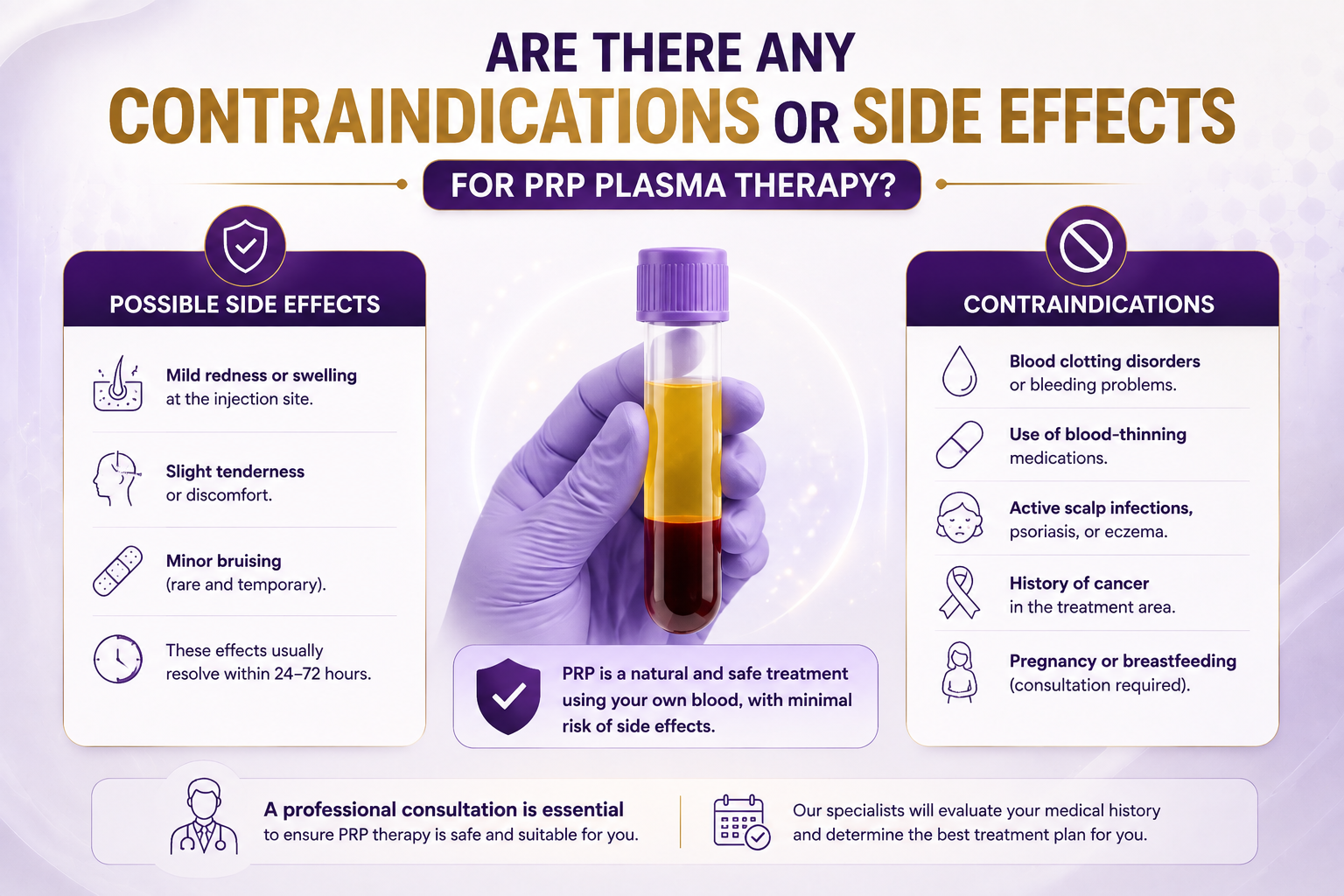
PRP therapy is widely regarded as one of the safest hair restoration procedures available today. Because the treatment uses your own biological material—your blood—there is virtually no risk of allergic reaction, rejection, or transmission of disease. It is a procedure that works with your body, not against it. However, like any medical treatment, PRP is not universally suitable for everyone.
Who Should Avoid PRP Therapy?
1. Blood Disorders & Bleeding Conditions
Examples: Hemophilia, thrombocytopenia, von Willebrand disease, or any clotting-affecting condition — including patients on blood thinners (warfarin, heparin, high-dose aspirin).
If you are on blood thinners for a medical condition, do not stop them without consulting your prescribing physician. We evaluate your specific case first.
2. Active Scalp Infections Or Severe Dermatological Conditions
Examples: Active bacterial or fungal infections, severe psoriasis, seborrheic dermatitis flare-ups, open wounds, or sunburn on the scalp. If present, we treat that first and schedule PRP once your scalp has healed.
3. Pregnancy & Breastfeeding
As a precautionary principle, we defer elective cosmetic procedures until after pregnancy and breastfeeding have concluded. Safe, non-invasive supportive options can be discussed in the meantime.
4. Unstable Chronic Medical Conditions
Examples: Uncontrolled diabetes, active autoimmune diseases, severe anemia, or any condition of acute physiological stress. Chronic conditions must be well-managed and stable before proceeding.
5. History Of Cancer In The Treatment Area
We avoid injecting growth factors into areas with a history of malignancy as a standard medical precaution. Patients undergoing chemotherapy or radiation are not candidates until cleared by their oncologist.
6. Recent Steroid Use Or Heavy Smoking
Corticosteroids can suppress the healing mechanisms PRP aims to activate. Heavy smoking impairs circulation and oxygen delivery to the scalp. We advise smoking cessation at least 2 weeks before and after each session.
What Side Effects Can You Expect?
Because PRP is autologous (from your own body), serious side effects are extremely rare. Most patients experience only mild, temporary sensations that resolve quickly.
Side Effect
Frequency
Duration
Description
Scalp Redness
Very Common
2–24 hours
Mild pinkness at injection sites, similar to after a facial.
Tenderness / Sensitivity
Very Common
24–48 hours
A sensation like a mild sunburn or tightness on the scalp.
Slight Swelling
Common
24–72 hours
Minimal puffiness around the forehead or injection zones.
Minor Bruising
Uncommon
3–7 days
Small, faint marks where the needle entered; easily concealed by hair.
Mild Headache
Rare
Same day
Usually resolves with hydration and rest.
Itching
Rare
1–2 days
A sign of healing and increased circulation; avoid scratching.
How We Minimize Every Risk At ATC Hair Transplant
Pre-Treatment Screening: A detailed medical questionnaire and scalp examination identify any contraindications before your first session
Sterile Technique: All equipment is single-use and medically sterilized
Topical Numbing: A high-quality anesthetic cream is applied before injections to minimize any discomfort
Expert Technique: Ultra-fine needles and precise injection depths avoid trauma, nerve irritation, or vascular injury
Post-Treatment Guidance: Clear aftercare instructions to protect your scalp and optimize healing
The bottom line: PRP is not a risky procedure. For the right candidate, it is one of the safest investments you can make in your hair's future. The key is honest, thorough screening—and that is exactly what we provide. Not sure if you qualify? During your free consultation, we will review your full medical history, examine your scalp condition, and give you an honest, professional recommendation.
The ATC Difference
Why We Include PRP Therapy At No Cost
At ATC Hair Transplant and the Turkish Hair Transplant Academy, we do not view hair restoration as a single-day event. We see it as a complete journey—one that begins with your first consultation and continues long after you leave the operating room. This is why we provide complimentary PRP therapy as a standard part of our care packages. It is not an upsell. It is not an optional add-on. It is a non-negotiable pillar of our commitment to your success.
Because Surgery Day Is Just The Beginning
Many clinics consider their job finished the moment the last graft is placed. We believe that is where the most critical phase begins. A hair transplant relocates healthy follicles to thinning areas—but those follicles still need to survive the trauma of transplantation, establish a new blood supply, adapt to a foreign microenvironment, and begin producing strong, permanent hair shafts. PRP is the bridge between transplantation and transformation. Without proper post-operative support, even perfectly executed surgery can underdeliver. With PRP, you close the gap between good results and exceptional ones.
Because Aftercare Defines Your Final Outcome
The quality of your final result is determined not only by the surgeon's skill, but by what happens in the 6 to 12 months that follow.
Phase
What Happens
Risk Without PRP
Benefit With PRP
Days 1–7
Grafts are fragile and establishing roots
Shock loss; poor anchoring
Faster healing; stronger graft attachment
Weeks 2–4
Scalp recovery and inflammation management
Prolonged redness, itching, or infection risk
Reduced inflammation; calmer, healthier scalp
Months 1–3
Shedding phase (transplanted hairs fall out)
Anxiety; premature concern about failure
Confidence; visible scalp health maintained
Months 3–6
New growth emerges from transplanted follicles
Slow or patchy regrowth
Accelerated, denser, more uniform growth
Months 6–12
Hair thickens and matures
Suboptimal density; thin or weak strands
Maximum thickness; robust, natural-looking results
Because New Follicles Deserve The Best Start
Transplanted follicles are like seedlings moved to new soil. Even the healthiest seedling will struggle if the soil is not enriched. PRP acts as that enrichment by:
Accelerating vascularization: New blood vessels form faster around grafts, ensuring they receive oxygen and nutrients immediately
Reducing shock loss: PRP stabilizes surrounding native follicles and preserves your existing density
Boosting graft survival rates: Clinical studies consistently show higher follicle survival percentages with post-transplant PRP
Improving hair shaft caliber: Transplanted hairs grow thicker, stronger, and more pigmented when supported by PRP's growth factors
Because We Measure Success By Your Satisfaction, Not Our Invoice
In an industry where clinics often charge separately for every component of care, our decision to include PRP at no cost reflects a fundamentally different value system: no hidden fees or surprise charges, no compromise on quality to save costs, no guesswork about whether you "really need" the extra treatment—it's already included—and peace of mind knowing your clinic is invested in your long-term result, not just your upfront payment.
Because Education And Excellence Go Hand In Hand
As the Turkish Hair Transplant Academy, we are not only a treatment center—we are a teaching institution dedicated to advancing the standards of hair restoration globally. By making PRP a standard, complimentary component of our protocols, we set the benchmark for comprehensive patient care, train the next generation of specialists to prioritize outcomes over revenue, and contribute to clinical data that proves integrated care delivers superior results.
Our Promise To You
What Other Clinics Do
What We Do
Treat the transplant as the final product
Treat the transplant as the foundation
Charge extra for post-operative PRP
Include PRP at no additional cost
Discharge you and hope for the best
Follow your progress with structured aftercare
Focus on graft numbers
Focus on graft survival and final density
The bottom line: we provide PRP free of charge because we believe in the complete picture of hair restoration. Surgery plants the seeds. PRP nurtures them. And our ongoing care ensures they flourish. Your results are our reputation. Your satisfaction is our success metric. And your trust is the reason we refuse to cut corners.
Ready To Experience It?
Schedule Your Consultation With ATC Hair Transplant Today
Hair restoration the way it should be — comprehensive, compassionate, and committed to excellence.