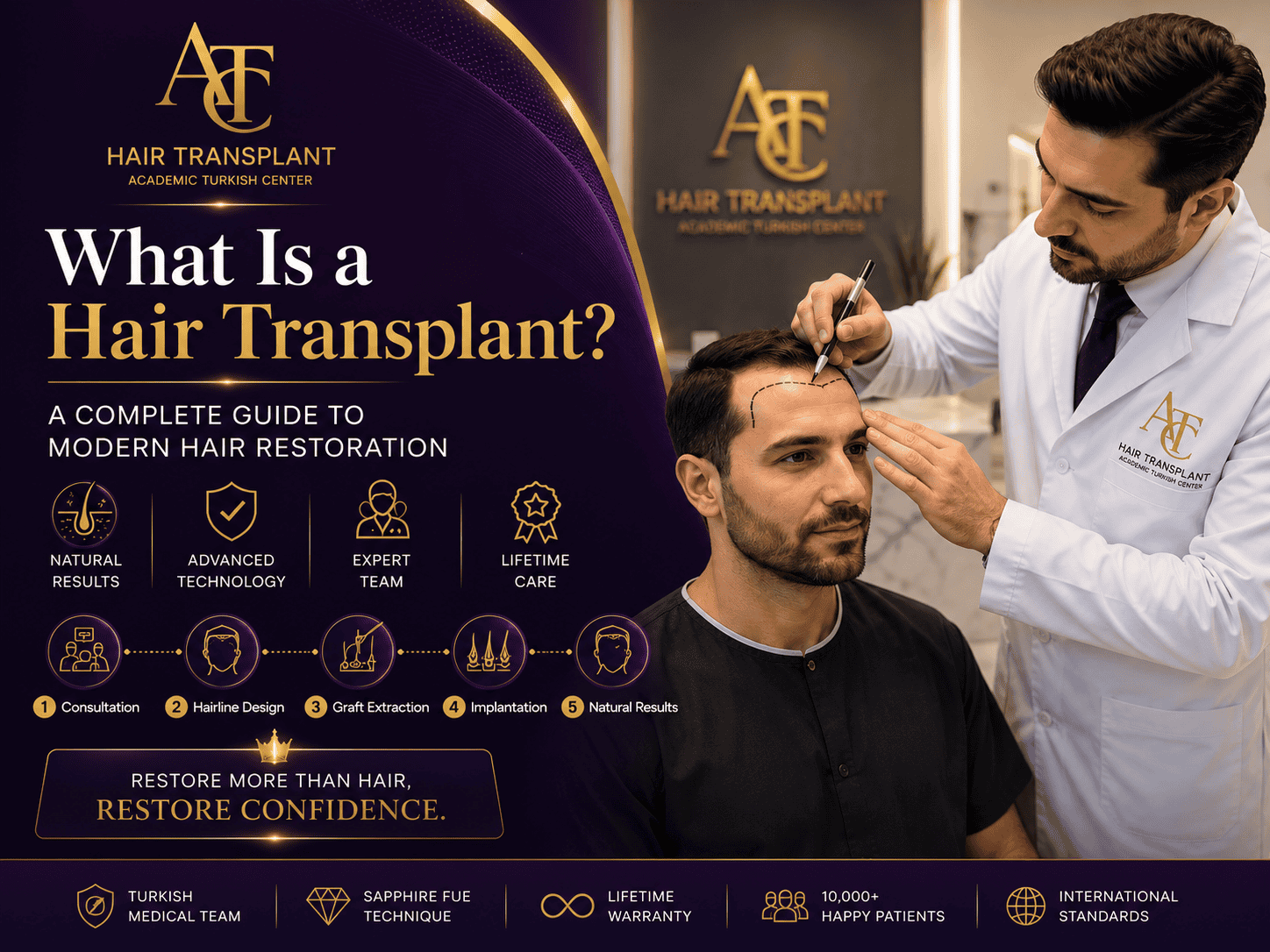
What Is a Hair Transplant?
Hair loss affects millions of men and women worldwide, often impacting not only appearance but also self-confidence and emotional well-being. While shampoos, supplements, and medications may help slow hair loss, they cannot permanently restore hair in areas where follicles have already disappeared. This is where a hair transplant offers a long-lasting solution.
A hair transplant is a minimally invasive surgical procedure that restores hair by relocating healthy hair follicles from one part of the scalp — known as the donor area — to areas affected by thinning or baldness, called the recipient area. Because these transplanted follicles retain their natural resistance to hair loss, they continue to grow in their new location for many years, providing natural and permanent results.
Thanks to significant advances in medical technology, modern hair transplantation has become safer, more precise, and capable of producing results that are virtually indistinguishable from naturally growing hair. Today, techniques such as Sapphire FUE allow surgeons to create softer hairlines, higher density, and faster recovery compared to older methods.
Whether you are considering treatment for male pattern baldness, female hair thinning, beard enhancement, or scar camouflage, understanding how hair transplantation works is the first step toward making an informed decision.
Why Do People Lose Their Hair?
Hair loss is a natural process that can occur for many different reasons. While losing 50–100 hairs per day is considered normal, excessive hair shedding or permanent thinning often indicates an underlying cause.
The most common causes include:
Genetics (Androgenetic Alopecia)
The leading cause of hair loss is hereditary male or female pattern baldness. This condition gradually shrinks hair follicles over time until they stop producing healthy hair.
Hormonal Changes
Changes in hormone levels caused by aging, pregnancy, menopause, or certain medical conditions can contribute to thinning hair.
Stress
Physical or emotional stress may trigger temporary hair shedding known as Telogen Effluvium.
Medical Conditions
Hair loss may also result from:
- Thyroid disorders
- Alopecia Areata
- Autoimmune diseases
- Scalp infections
- Certain medications
Nutritional Deficiencies
A lack of essential nutrients such as:
- Iron
- Zinc
- Vitamin D
- Biotin
- Protein
can negatively affect healthy hair growth.
What Is the Goal of a Hair Transplant?
The purpose of a hair transplant is not simply to add more hair — it is to restore a person's natural appearance while maintaining facial harmony.
A successful transplant should achieve:
- A natural-looking hairline
- Balanced density
- Proper hair direction
- Long-term growth
- Undetectable results
Modern hair transplantation focuses on artistry just as much as medical precision. Every hair follicle is carefully positioned according to the patient's facial structure, age, and future hair loss pattern.
How Does a Hair Transplant Work?
The procedure is based on one simple scientific principle: hair follicles taken from areas genetically resistant to hair loss continue growing even after they are transplanted.
Most donor follicles come from the back and sides of the head because these areas are naturally resistant to DHT (Dihydrotestosterone), the hormone responsible for male pattern baldness.
The procedure consists of four main stages.
Step 1 – Consultation and Hair Analysis
Every successful hair transplant begins with a detailed consultation. During this stage, the surgeon evaluates:
- Hair loss pattern
- Donor area quality
- Hair thickness
- Hair color
- Scalp condition
- Medical history
- Future hair loss progression
A personalized treatment plan is then created based on the patient's needs and expectations.
Step 2 – Hairline Design
Hairline design is one of the most important parts of the procedure. Rather than creating a straight or artificial line, experienced specialists design a hairline that complements:
- Face shape
- Age
- Forehead size
- Existing hair
- Future aging
An improperly designed hairline may look unnatural, even if the surgery itself is technically successful.
Step 3 – Follicle Extraction
Once local anesthesia has been administered, healthy follicles are carefully extracted from the donor area using specialized micro-punch instruments. Each follicular unit naturally contains:
- One hair
- Two hairs
- Three hairs
- Occasionally four hairs
These grafts are preserved in a controlled solution to maximize survival until implantation. Modern Sapphire FUE techniques allow extraction without leaving a noticeable linear scar.
Step 4 – Implantation
The surgeon creates tiny channels in the recipient area according to the planned angle, direction, and density. Each follicle is then implanted individually. The angle of implantation is critical because it determines how naturally the hair will grow after healing.
Natural density depends on:
- Available donor hair
- Hair thickness
- Hair color
- Curl pattern
- Scalp characteristics
Every patient receives a customized implantation plan rather than a one-size-fits-all approach.
Is a Hair Transplant Permanent?
One of the most common questions patients ask is whether a hair transplant lasts forever. In most cases, the answer is yes.
The transplanted follicles come from areas that are genetically resistant to hair loss. Once these follicles establish a blood supply in their new location, they continue producing hair naturally.
However, it is important to understand that a hair transplant does not stop the natural aging process or prevent non-transplanted hair from thinning over time.
For this reason, your surgeon may recommend supportive treatments such as:
- PRP therapy
- Mesotherapy
- Medical therapy (when appropriate)
- Regular follow-up examinations
These treatments help maintain the health of your existing hair while protecting your long-term results.
Who Is a Good Candidate for a Hair Transplant?
Hair transplantation is suitable for many individuals experiencing hair loss, but not everyone is an ideal candidate.
You may be a good candidate if you:
- Have permanent hair loss caused by genetics.
- Have a healthy donor area with enough hair follicles.
- Are in good general health.
- Have realistic expectations about the outcome.
- Have stable hair loss or a pattern that can be effectively treated.
Hair transplantation can benefit:
- Men with male pattern baldness.
- Women with localized thinning.
- Patients seeking beard or eyebrow restoration.
- Individuals with scars that no longer grow hair.
On the other hand, patients with certain medical conditions, active scalp diseases, or insufficient donor hair may require alternative treatments or additional evaluation before surgery.